

Why China Health Check-ups Look Expensive: Two Markets, One Country (2026)
China has two check-up price markets — a free or very low-cost public and employer-provided layer, and a private layer priced for English service. This guide explains the gap, what $299 buys, and why city packages differ. Coordination by QGO Medical.
QGO Medical China provides coordination support only. We do not provide medical diagnosis, treatment, emergency care, immigration advice, or promised outcomes. All medical decisions should be made in consultation with licensed professionals.
Why Does a Private Health Check-up in China Look Expensive?
China has two very different check-up price markets, and most price surprises come from comparing a private-service package against the free or very low-cost public baseline rather than against a private clinic abroad. They are not the same product, and the gap is structural rather than a mark-up.
The pattern is consistent enough across markets to be worth naming. A visitor arrives with a price expectation formed either from a private screening clinic at home, or from the general impression that check-ups in China are inexpensive. They then meet a package priced in hundreds of dollars and the number feels wrong — usually because of the baseline used for the comparison rather than the absolute amount.
China runs a large public health system, and a basic health examination is an ordinary part of life inside it — reached through an employer, a neighbourhood clinic or a local insurance arrangement rather than bought individually. Where such an arrangement covers someone, the price of a basic check-up can be zero. That zero is the reference point most visitors absorb without being told they are absorbing it.
Measure a private package against that reference point and the multiple looks large. Measure the same package against a private screening clinic in London, New York or Singapore and it reads as a modest saving rather than a premium. Both comparisons are arithmetically valid and they point in opposite directions, which is precisely why the price feels like a verdict rather than a fact.
This page explains the structure behind that feeling rather than repeating price figures, because five guides already carry them: what the base China health check-up price covers in the main cost guide, the $299 Premium Base Package broken down line by line, how full-body packages compare across ranges, and the costs that sit outside a quoted price.
What follows is the part a price table cannot carry: what each layer actually sells, and why the gap between them is structural.
What Are the Two Price Markets in China?
China’s check-up market runs on two price layers: a public and employer-provided layer that can be free or very low cost, and a private layer that charges several times more for English service, short notice and a guided visit.

The public and employer-provided layer. Basic health examinations are available through the public health system and through employer arrangements. Access comes from the arrangement rather than from an individual purchase — an employer programme, a community health centre, or a local insurance scheme that includes a periodic examination. Because the funding is not yours, the price question barely arises. This layer produces the low reference point most visitors carry without realising it.
The private layer. A private check-up is an individual purchase, scheduled around your dates, usually inside a private hospital or a dedicated check-up centre. It is sold with English-language guidance, a report issued in English, a shorter wait, and a visit that does not run alongside a general outpatient queue. Those service attributes are what the premium buys; the clinical test list between the two layers usually overlaps more than the price difference suggests.
The structural point is that the two layers sell different products. A public or employer-provided examination is a screening pass inside a group arrangement. A private package is a scheduled, language-supported, individually financed screening visit with coordination built around it. Comparing them on price alone compares the cost of two different things, which is why the comparison feels so lopsided.
This is also why price figures on their own do not settle the question: when the same test panel appears at very different prices, the difference usually sits in the service layer rather than in the tests. For the city-level figures, see China health check-up cost by city.
What Does the Free or Low-Cost Public Option Actually Cover?
Public and employer-provided check-ups in China can be free or very low cost, and they exist alongside private clinics charging several times more; this is a general feature of the Chinese system, not a QGO service.
Three factors determine what a public or employer-provided examination actually covers, and all three sit outside a visitor’s control.
Who provides the arrangement. An employer programme, a community health centre and a local insurance scheme each set their own scope. Eligibility follows from the arrangement rather than from the individual, so eligibility can change with it.
What is on the list. The covered items are defined by the provider rather than chosen by the person being examined. That list is generally screening-level: the routine panel the arrangement exists to deliver. Advanced imaging, specialist consultations and follow-up diagnostics sit outside that scope and are charged separately, which is why a covered basic examination rarely closes a health question on its own.
Which building you use. The arrangement usually determines the facility as well. Access to a named hospital of your own choosing is rarely part of it.
One boundary needs stating plainly. QGO Medical coordinates private check-ups. We do not arrange public or employer-provided check-ups, we hold no arrangement data with public or employer programmes, and we cannot quote for that layer. Anyone who already holds such an arrangement should ask the employer or the local community health centre directly.
That is a general feature of the Chinese system, not a QGO service, and QGO is the wrong place to look for it. It is the right place to look if you decide afterwards that you want a private, English-supported, individually scheduled check-up.
What Are You Actually Paying For at $299?
QGO Medical’s $299 Premium Base Package buys the private layer: a named coordinator, an English briefing before the visit, a bilingual report delivered to your email, and a follow-up call after the results arrive. All four sit outside the clinical services the hospital sells, which is why a private package costs more than a public one.

Breaking that down, the $299 covers four things, and each one is coordination rather than clinical work.
A named coordinator. Someone holds the booking end to end and knows which hospital, which department and which date.
An English briefing before the visit. What the panel includes, how long it takes, what preparation the examination needs, and what the report will contain — explained before you travel rather than discovered at the registration desk.
A bilingual report delivered to your email. Chinese medical terminology on a report is difficult to interpret even for readers with reasonable English. A bilingual version sent to your own inbox removes a step that otherwise lands on you after you have flown home.
A follow-up call after the results arrive. Once the report is in hand, a call to establish what it says and what your physician at home will need in order to act on it.
This layer exists because of a specific operational fact. Our coordination records note that many partner check-up facilities do not keep full-time English-speaking staff on site, though they will still guide you through the examination. That is specific to check-up centres; a public tertiary hospital with a full international department is a different setup.
QGO coordinates check-ups for a limited number of clients per month, because each booking requires a hospital match, an English briefing and a follow-up call after the report arrives. That capacity is deliberately finite, because the work is hands-on.
The $299 Premium Base Package is required before any health check-up add-on can be confirmed. For the itemised contents see the $299 package breakdown, and for the package as sold see the Premium Health Check-up Package.
Why Does the Same Package Include Different Tests in Different Cities?
Package contents are not identical across cities. The Premium Base Package in Guangzhou includes a renal CT at this price; the Shanghai package at the same price does not. QGO Medical confirms the itemised test list for your city in writing before payment, because the package name alone is not a reliable description.
Package names travel better than package contents. A reader in London and a reader in Sydney see the same name and the same headline price, and reasonably conclude they are buying the same thing. In China that conclusion fails in a checkable way: the itemised test list is set per hospital and per city while the name stays constant.
A renal CT is a clean example. The Premium Base Package in Guangzhou includes one at this price point. The Shanghai package at the same price point does not. Where a client has asked for the missing item, it has been coordinated separately — which works, but only because someone raised it. The lesson is the request itself: ask for the itemised list rather than relying on the package name.
Beijing is worth naming explicitly. QGO does not publish a Beijing-versus-other-city itemisation, so we are not going to describe what the Beijing package does or does not contain from memory. Beijing is confirmed in writing for your city, as every other city is, and the written list is the description to rely on.
For the city-level figures see check-up cost by city, and for the hospital resources and logistics behind each one see Shanghai vs Guangzhou vs Beijing compared.
Which Check-up Option Fits Which Situation?
The private layer fits visitors who need an English briefing, a guided visit, a bilingual report and short-notice scheduling; the public and employer-provided layer fits people who already hold an arrangement that covers a basic examination.
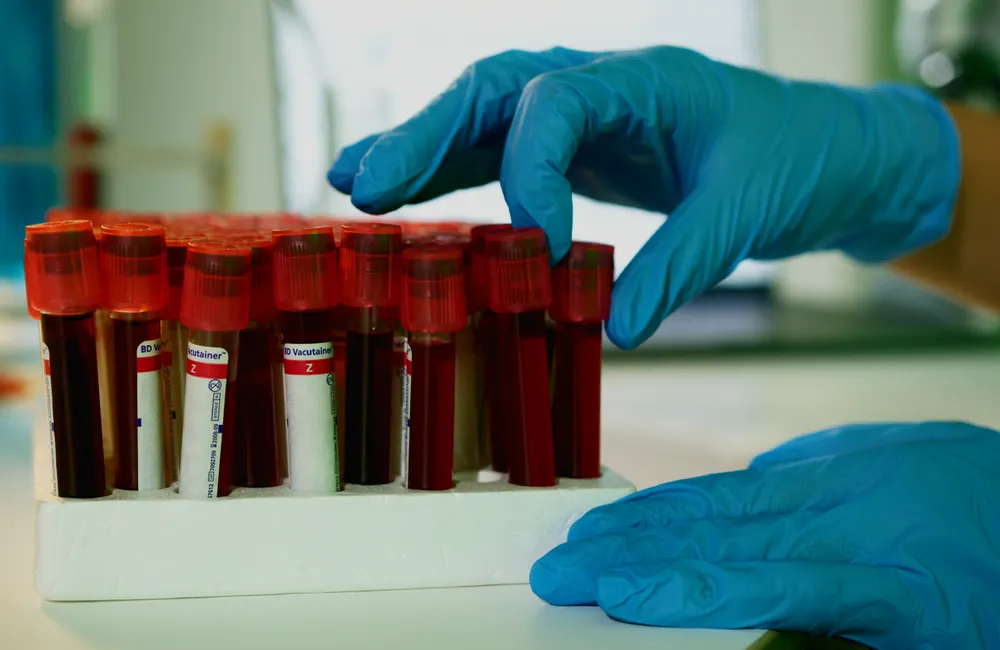
The table below maps situations to layers. Each row is a general pattern rather than a rule about a specific hospital: capacity, pricing and report practice vary between institutions, and the hospital itself confirms what it will do.
| Your situation | Layer that fits |
|---|---|
| You already hold an employer or local examination arrangement covering a basic panel | Public and employer-provided layer — use what you already have before paying twice for the same tests |
| Your physician at home needs the report in English, explained | Private layer — the bilingual report and follow-up call exist for exactly this |
| Your dates are fixed by a flight booking | Private layer — appointment-based scheduling built around your travel dates |
| You need a named tertiary hospital for an existing finding | Decide by the hospital first, then have QGO coordinate around it |
| You want the lowest possible cost and hold no existing arrangement | Ask a local community health centre or your employer about the public layer first — QGO cannot supply it, but they can |
| You want city-level package differences settled before you pay | Private layer — the written itemised test list is per city |
Where English-language hospital experience is the deciding factor rather than price, the depth of that support differs by hospital type and by city. English service at Beijing 3A hospitals sets out what international departments and main outpatient halls actually provide.
How Do You Compare the Two Markets Before Booking?
Comparing the two markets before booking takes three lines: the price basis, the itemised test list, and what language and coordination support are actually included.
One: establish the price basis. Ask what the quoted price covers and what sits outside it. A quoted package is an estimate of hospital-side test costs rather than a final bill; add-on tests, specialist consultations, imaging export, courier delivery and report translation are frequently billed separately. Read what sits outside a quoted check-up price before treating any figure as final.
Two: ask for the itemised test list in writing. The list is the product and the name is a label. Where two cities carry the same package name at the same price with different contents, the written list is the only thing that settles it.
Three: ask what language support is actually included. “English report” can mean a full bilingual report or a single English summary page, and the difference matters if a physician at home has to read it. Ask whether English-speaking staff are on site during the examination, or whether coordination happens before and after the visit.
Two habits follow. Ask for a stamped official invoice listing individual line items — the only reliable way to compare a quote against what you were charged. And keep hospital-side fees separate from any coordination fee, so the two layers stay comparable.
A health check-up is screening rather than diagnosis. Whatever you pay for, the report does not replace a licensed physician’s assessment. Before making medical decisions, consult your local physician.
Which Questions Do Visitors Ask Most About China Check-up Pricing?
Visitors most often ask three things about China check-up pricing: whether the price is high against the cost at home, why two cities can price the same package differently, and whether the free public layer can be arranged on their behalf.
Is a $299 check-up in China expensive compared with back home?
Against a private screening clinic in your own country, a $299 package with a bilingual report, a named coordinator and a follow-up call usually reads as a modest saving rather than a premium. Against a free or very low-cost public or employer-provided examination in China, it looks like a large multiple. Both comparisons are true, and the distance between them is the whole point of this page: the two layers sell different products, so the fair comparison is private against private. The item-list differences between cities described above apply in either direction.
Why does the same package price cover different tests in different cities?
Package contents are set per hospital and per city while the package name stays constant, so a same-price package can carry a different itemised list in Guangzhou than in Shanghai — the Guangzhou Premium Base Package includes a renal CT at this price point and the Shanghai package does not. QGO confirms the itemised test list for your city in writing before payment. Beijing is confirmed the same way: QGO does not publish a Beijing-versus-other-city itemisation, so the written list is the only description to rely on.
Can QGO arrange a public or employer-provided check-up instead?
QGO Medical arranges private check-ups, and the public or employer-provided layer sits outside that scope. We hold no arrangement data with public or employer programmes, and we cannot quote for that layer or advise on eligibility inside one. That layer is a general feature of the Chinese system, not a QGO service. If you already hold an employer or local arrangement, ask the employer or your local community health centre directly.
How Do You Start a Booking With QGO Medical?
Starting a booking with QGO Medical takes one message containing your passport name, your city, your date window and the package you are considering.
Send those four items and QGO can build a workable plan around them: scheduling, hospital-side communication, document preparation, translation coordination, itemised cost clarification before payment, and post-visit report handling.
What QGO does not do is diagnose, treat, provide emergency care, rank hospitals, or promise that any hospital will accept a given visitor or produce any particular result. Hospital-side fees and QGO coordination fees are separate, and QGO does not bundle a hospital quotation into a coordination quote.
One booking rule is worth knowing before you add anything: the $299 Premium Base Package is required before any health check-up add-on can be confirmed.
If you are still deciding between cities, Shanghai, Guangzhou and Beijing compared sets out hospital resources, lead times and logistics for each. If English-language hospital experience in Beijing is the deciding factor, how English service differs across Beijing 3A hospitals covers that in detail. For the price figures themselves, start at the main China health check-up cost guide.
Before making any medical decision, consult your local physician. Clinical decisions stay with licensed professionals.
References: Which Official Sources Did We Verify?
The sources below are official government, accreditation body, and national hospital pages; each URL was verified for reachability and page identity before this guide was written, and two anti-bot-protected sites are flagged below rather than replaced.
- National Health Commission of the PRC (国家卫生健康委员会) — verification state C. Returned HTTP 412 to an automated request from our network. Anti-bot protection, not a dead link; the portal is reachable from a normal browser.
- National Healthcare Security Administration (国家医疗保障局) — verification state A. Official administrator of national medical insurance pricing and settlement policy.
- National Development and Reform Commission (国家发展和改革委员会) — verification state A. Sets national medical service price items, which is where public-sector examination charges originate.
- Beijing Municipal Health Commission (北京市卫生健康委员会) — verification state A. Official Beijing health authority. Note: the correct domain has no www — www.wjw.beijing.gov.cn fails DNS resolution.
- Shanghai Municipal Health Commission (上海市卫生健康委员会) — verification state A. Official Shanghai health authority — one of the three cities named on this page.
- Guangdong Provincial Health Commission (广东省卫生健康委员会) — verification state A. Official Guangdong health authority — one of the three cities named on this page.
- Joint Commission International (JCI) — verification state C. Returned HTTP 403 to an automated request from our network. Anti-bot protection, not a dead link.
- World Health Organization (WHO) — verification state A. International health authority; reference point for screening versus diagnosis.
- Peking Union Medical College Hospital (北京协和医院) — verification state A. Official site of the tertiary hospital cited as a public-sector reference point.
- Peking University International Hospital (北京大学国际医院) — verification state A. Official site of an international hospital — reference point for the private, English-supported layer.
- Huashan Hospital, Fudan University (上海华山医院) — verification state A. Official site of the Shanghai tertiary hospital cited as a public-sector reference point.
- West China Hospital, Sichuan University (华西医院) — verification state A. Official site of the tertiary hospital cited as a public-sector reference point.
Verification note: Each link was checked for HTTP status, response size and page title. Two sources return an anti-bot response to automated requests from our network — the National Health Commission portal (HTTP 412) and Joint Commission International (HTTP 403). Anti-bot protection is not a dead link, and both remain reachable from an ordinary browser. Two candidate URLs were discarded as genuinely broken: the www. variant of the Beijing Municipal Health Commission domain fails DNS resolution (the working address has no www), and a WHO health-topics deep link returned HTTP 404.
Image credits: All photographs are licensed stock from Pexels. The Pexels License does not require attribution, so no credit line sits in the body text; the source record is kept here.
- Pexels photo 19921278 — pexels.com
- Pexels photo 127873 — pexels.com
- Pexels photo 7108318 — pexels.com
- Pexels photo 8533143 — pexels.com
Last reviewed: 2026-10-26.