
What Your Written China Health Check-up Plan Should Confirm
A written China health check-up plan should separate included tests, excluded tests, items needing hospital confirmation and optional add-ons. See what QGO confirms before you book.
QGO Medical China provides coordination support only. We do not provide medical diagnosis, treatment, emergency care, immigration advice, or promised outcomes. All medical decisions should be made in consultation with licensed professionals.
Why Does a Package Name Not Tell You What Is Included?
A China health check-up package name is a marketing label, while the itemised written list is the document that tells you what you will actually receive on the day.
The gap between those two things is where most visitor misunderstandings start. A package called a 12-item or 24-item panel tells you how many headline tests are grouped together, and it tells you nothing about whether the imaging line is a low-dose chest CT or a full contrast abdomen study, whether a translation of the report is bundled or billed separately, or whether the gynaecological ultrasound applies to the person standing in front of the desk on the day.
This is also where price expectations split. Our guide to why China health check-ups look expensive in two different price markets explains why the same test name can carry a very different number depending on which hospital tier and which district you are quoted. A written list is what lets you see which tier you are actually booking.
Two further framing points should be settled before you read any list. First, a health check-up is screening rather than a diagnostic evaluation: it measures markers across a whole body, and a marker result is an input to a conversation with a clinician rather than an answer. Second, a quoted package price is an estimate of hospital-side test costs rather than a final bill (估算不是最终账单, 最终收费以医院确认为准). The list defines the estimate. Our page on China health check-up hidden costs sets out the items that most often sit outside the package price.
Whether a report produced from that list is accepted or acted on by your home-country physician is decided by that physician, not by the hospital that produced it and not by QGO.
Which Four Categories Should Every Written Plan Separate?
A usable written plan separates every line item into four categories: included, excluded, needs hospital confirmation, and optional.
If a single document mixes all four together, the reader has to guess which column each line belongs to, and that guessing is what turns into a surprise invoice at the hospital desk. Separating them on paper is a low-cost habit that removes almost all of that ambiguity.
| Category | What it means on paper | Typical line items | Who confirms it |
|---|---|---|---|
| Included | Named on the written list and confirmed as part of the package price. | Blood count (血常规), biochemistry panel (生化), urinalysis (尿常规), basic chest imaging | Hospital, in writing, before payment |
| Excluded | Explicitly stated as outside the package and billed separately. | Report translation, courier delivery, escort or accompanying-person fees, interpreter hours, repeat tests on the day | Hospital, in writing, before payment |
| Needs hospital confirmation | Appears in the package title or marketing material, but the hospital must confirm the actual specification. | Scanner model, contrast protocol, fasting duration, whether same-day reporting is possible, whether a repeat is required after contrast | Receiving hospital, in writing |
| Optional | Available on request at an additional cost, added to the scope before the visit. | Tumour marker add-ons, extra imaging views, vaccinations, dental scaling | Hospital plus QGO, in writing |
Read the third column as examples of the kind of line that lands in each bucket rather than as a recommendation for any individual. A blood count and a contrast CT behave very differently in practice, and which of them belongs in your written scope is a clinical decision made by the receiving hospital together with your own physician, not a reading of a package brochure.
The fourth column is the one visitors most often skip. Each of the four buckets has a different owner, and a plan that leaves the third column without a named confirmer is a plan with an open question in it. Ask who signs off, ask in writing, and ask early enough that the answer arrives before you travel rather than at the hospital reception desk.
Why Do Imaging Names Cause the Most Confusion on Paper?
Imaging lines cause the most confusion on paper, because a single written term such as chest CT can cover different scanners, different body regions, and different contrast protocols.
Imaging is also the line item most likely to change price between the quotation and the invoice, because it is the item most often upgraded on the day. A visitor arrives with a written list, is offered a newer scanner by a staff member in a way that sounds like a routine part of the package, and discovers at the payment counter that the written scope and the delivered scope were never the same document.
There is a geographic dimension too. Our guide to Shanghai vs Guangzhou vs Beijing health check-ups for foreign visitors covers how scanner access, report turnaround, and international-department capacity differ by city. A written list obtained in one city is a stronger document than a verbal description carried between cities.
Four questions resolve most imaging ambiguity on paper: which scanner model, which body region, contrast or no contrast, and how long the report takes. If the written list answers all four, the imaging line is settled. If it answers one or two, the line belongs in the needs-confirmation column until the hospital fills the gap in writing.
One practical note on cost control: a quote that bundles imaging without specifying it is a quote you should expect to revise. Ask for the itemised version, keep it, and treat the difference between the headline package price and the itemised total as the real number when you compare options.
What Usually Differs Between Women’s and Men’s Written Checks?
Written plans commonly separate women’s and men’s scopes, because ultrasound, breast, cervical, prostate, and hormone items are usually scoped by sex in Chinese hospital packages.
That split is a feature of how packages are written rather than a clinical recommendation. Hospitals list sex-scoped items separately because the equipment, the department, and the staffing differ, so folding them into one headline panel would make the quoted price meaningless for half the people it is written for.
The practical consequence for a visitor is that a panel quoted for one person is rarely the right comparison for another. A parent and an adult child travelling together will usually be quoted different written scopes, and the second person’s quotation is the one that should be checked line by line. Where an item is written as optional, the hospital will usually explain the cost separately; where an item is written as needs-confirmation, the hospital decides what it can perform on the day.
If you are travelling with someone whose previous screening history differs from yours, say so at the quotation stage rather than at the hospital desk. A written scope that reflects an existing condition, a prior result, or an ongoing medication list reads very differently from one written from scratch, and the hospital is the party that needs to know in order to write it accurately.
Why Does Each Family Member Need Their Own Written List?
Each family member travelling together needs a separate written scope, because age, sex, and pre-existing conditions change what a hospital can list in writing.
Group bookings are convenient for scheduling and frequently quoted as a single arrangement, which is exactly how the paperwork gets muddled. One family, one appointment window, one payment conversation, but several different written scopes. When a hospital issues a package list for a group, it should still be itemised per person, and each person’s list should carry their own age and sex at the top.
Three things go wrong most often in group bookings. The first is a shared scope where one traveller’s quotation becomes the template for everyone else. The second is add-ons applied to the group when they were agreed for one person only. The third is a single delivery address and a single report handover, which creates a privacy problem for adults travelling with parents.
Our page on planning a China health check-up visit as a foreign visitor covers the scheduling side of a group trip. The written list is the part that has to exist per person before any of it is booked.
For QGO, the rule is straightforward: we ask for one written scope per traveller, each tied to a name and a passport, and we keep them in the same file so that the hospital desk and the traveller are reading the same document on the day.
What Does QGO Confirm Before You Book a Package?
QGO asks each hospital for an itemised written scope and cost list before a visitor commits to payment, because the receiving hospital decides what it can offer and what it must confirm.
Concretely, before a booking is confirmed QGO puts a written question set to the hospital and waits for a written answer. The questions cover which items are included, which are excluded, which need confirmation, which are optional and at what price, how long the report takes, how the report is handed over, and what happens if a test has to be repeated on the day.
On add-ons there is a standing condition, and it is worth stating plainly: the $299 Premium Health Check-up Package is a prerequisite for any add-on. Add-on tests are priced on top of a base package scope rather than standalone, so a request for an additional test is confirmed against an existing package booking. Our Premium Health Check-up Package page describes that base scope.
On reports, we confirm what you receive and in what form before you pay, because report delivery is a frequent source of disappointment after the visit itself is over. Our page on what you should receive after a China health check-up sets out the seven items a visitor can reasonably expect to have in hand.
On routing, there is a boundary worth repeating: a written plan describes scope and cost, while medical suitability is decided by the receiving hospital and by your own physician. If you arrive with a specific symptom rather than a screening request, the correct path is a specialist visit rather than a package, and that distinction is covered in health check-up and specialist visit differences in China.
QGO coordinates appointments, documentation, and report handling for non-emergency visits. QGO does not diagnose, does not decide which tests any individual should have, does not promise that a hospital will accept a given visitor on a given date, and does not respond to emergencies.
How Do You Read a Hospital’s Original Test List Line by Line?
A hospital’s own itemised test list is the document that decides what you actually receive, so it is worth reading item by item instead of comparing package names.
The four categories above sort a plan by who confirms each line. The hospital’s original list is sorted differently: by what kind of line each item is. Four line types appear on almost every hospital list, and each one answers a different question. Reading them separately is faster than scanning a long list, and it is what makes two written scopes comparable.
| Line type | What it looks like on the hospital’s list | What to check in writing | Why the wording matters |
|---|---|---|---|
| Individual test (单项) | One named investigation, for example thyroid ultrasound or a chest CT scan. | The exact item name the hospital will print on your report, and whether the written scope names that item or only names a category. | The name that appears on the report and the name on the package are often not the same, so a category on paper does not confirm the specific test you receive. |
| Panel (组合) | A bundled group of measurements, for example a tumour marker panel. | Which measurements the panel actually contains, and whether the hospital records them as separate lines. | A panel is not the same thing as its individual tests: the panel is performed, priced, and reported as a set. |
| Conditional (条件) | Items that depend on age, sex, medical history, or your condition on the day, such as sex-specific items or tests that require fasting. | Which condition triggers the item, who checks it, and whether it is added before the visit or on the day. | Conditional lines are decided by the hospital for your own situation, so they are the lines most often different between two quotations for the same package name. |
| Excluded (排除) | Items the package does not cover, items charged separately, and items the hospital issues on a separate order sheet. | What the exclusion actually covers, and what happens if you still want that item done. | An exclusion line tells you in advance what will not be in the price. It is the line that prevents a surprise at the payment desk. |
Three boundaries apply to everything in that table, and they are the same on every hospital list you will be shown.
- A package name is not the same as its actual inclusions. Only the item list the hospital confirms in writing counts as the scope of what you receive.
- One test inside a panel cannot necessarily be separated from the panel. Whether a single test can be performed and billed on its own is a hospital decision, not a packaging promise.
- Conditional items are decided by the hospital for your particular situation. QGO passes the question to the hospital and returns the written answer; QGO does not judge medical suitability on the hospital’s behalf.
One more reading habit closes most of the gap: match the wording on the package against the wording on the hospital’s list, character by character, because the same test is often written two different ways.
| How a package may describe it | How the hospital may write it | What the difference changes | What to do |
|---|---|---|---|
| “CT” | “Chest CT, plain scan (胸部 CT 平扫)” | Body region, contrast protocol, and sometimes the scanner model. | Ask for the region, the contrast protocol, and the scanner model in writing. |
| “Tumour markers” or “肿瘤标志物” | “AFP / CEA / CA19-9 (three-item panel)” | Which measurements are actually performed and reported. | Ask for the analyte list, and treat the panel as a panel rather than as one test. |
| “Blood test” or “血常规” | “CBC with differential count (白细胞分类)” | Whether the differential count and any extra indices sit inside that line. | Ask whether the differential count is included in the package price. |
| “Ultrasound” | “Thyroid ultrasound (甲状腺超声)” | Which organ is scanned, and how many areas. | Ask for the organ and the area, not the imaging modality. |
Add-on tests are priced on top of a base package scope, and the $299 Premium Health Check-up Package is the required base scope for any add-on. For how a package scope maps to a written list, see Health Check-up Cost in China; for how scope and price differ by city, see China Health Check-up Cost by City.
Frequently Asked Questions
How many items should a written China health check-up plan contain?
Panels range widely, from a short general panel to a long one, so item count on its own is a weak comparison. What matters is whether each line is itemised and labelled as included, excluded, needs-confirmation, or optional. A 30-item list where every line carries one of those four labels is more useful than a 12-item headline panel with no breakdown. Ask for the itemised version regardless of how the package is marketed.
What should I do if a hospital sends a brochure instead of an itemised list?
Ask for the itemised version in writing before you pay, and name the four categories in your request so the answer has a fixed shape. Most hospitals will supply a written scope for a scheduled booking because they need it for consent and billing anyway. If a hospital declines to itemise in writing, that is useful information in itself: you can compare the quoted total against the itemised lists you did obtain from other hospitals before deciding.
Can I add tests that are not in my package once I arrive in China?
Add-ons are arranged before travel wherever possible, and the $299 Premium Health Check-up Package is a prerequisite for any add-on because add-on tests are priced on top of a base package scope. If you decide on-site that you want an additional test, the hospital decides whether it can perform it that day, quotes it separately, and QGO can help you get that quote in writing. On-site add-ons carry the most risk of a day running late, so raising them in advance is the better route.
Can I get one test from a health check-up panel instead of the whole package?
Whether a panel can be split is a hospital decision, and it is confirmed on the hospital’s written itemised list rather than in package marketing. QGO puts that question to the hospital and returns the written answer, but QGO does not promise that a panel can be separated into single tests. The hospital decides whether one test can be performed on its own that day, and how it is billed.
How Do You Ask QGO For a Written Plan?
Send QGO your passport name, travel dates, age and sex for each traveller, any previous screening reports you already hold, your current medication list, and the questions you want the written scope to answer. QGO puts those questions to the hospital in writing and returns the itemised scope and cost list before you decide anything.
QGO coordination covers appointments, documentation, translation arrangements for scheduled visits, and report handling. Clinical decisions, hospital acceptance, and travel feasibility stay with the receiving hospital and with your own physician. In an emergency, call 120 in China, 911 in the United States, or 999 in the United Kingdom, or go to the nearest emergency department.
References
Sources below are official government, accreditation body, and national hospital references for a YMYL medical-coordination topic. Last reviewed: 2026-10-26.
- National Health Commission of the PRC (国家卫生健康委员会)
- Joint Commission International (JCI accreditation standards)
- World Health Organization
- WHO International Travel and Health
- Peking Union Medical College Hospital (北京协和医院)
- Shanghai Huashan Hospital (上海华山医院)
- Peking University International Hospital (北京大学国际医院)
- West China Hospital, Sichuan University (华西医院)
- China Center for Disease Control and Prevention
- Chinese Hospital Association
- The State Council of the PRC (English portal)
- Beijing Municipal Health Commission (北京市卫健委)
Image credits / 图片来源
Real photographs taken on site at medical facilities in China. Source records are listed here for audit.
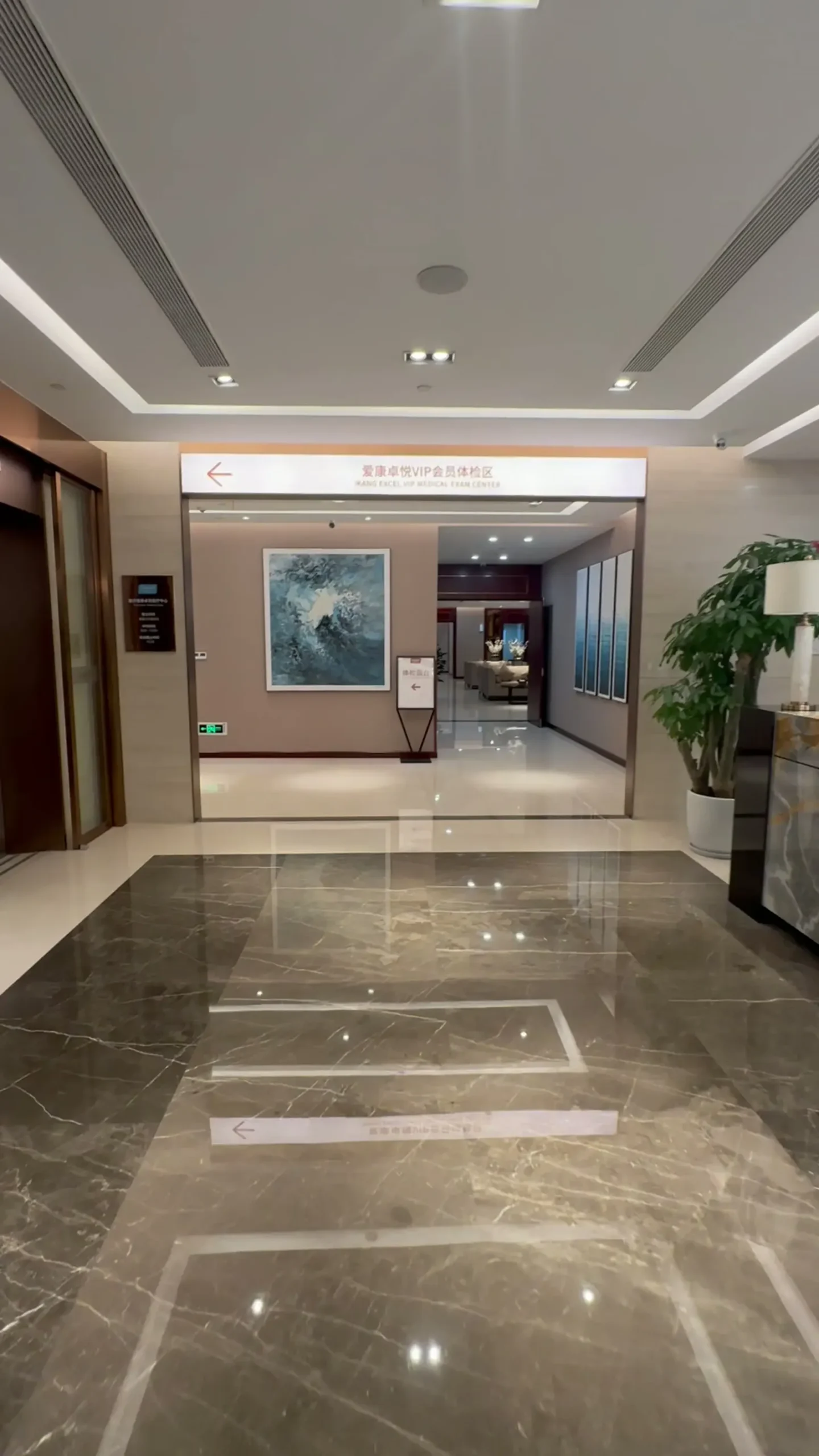
- Entrance to the VIP health check-up area at a partner medical centre in China, with bilingual Chinese-English signage and a marble floor – QGO Medical — Real photograph taken on site at a QGO partner medical centre in China. Courtesy of the centre.
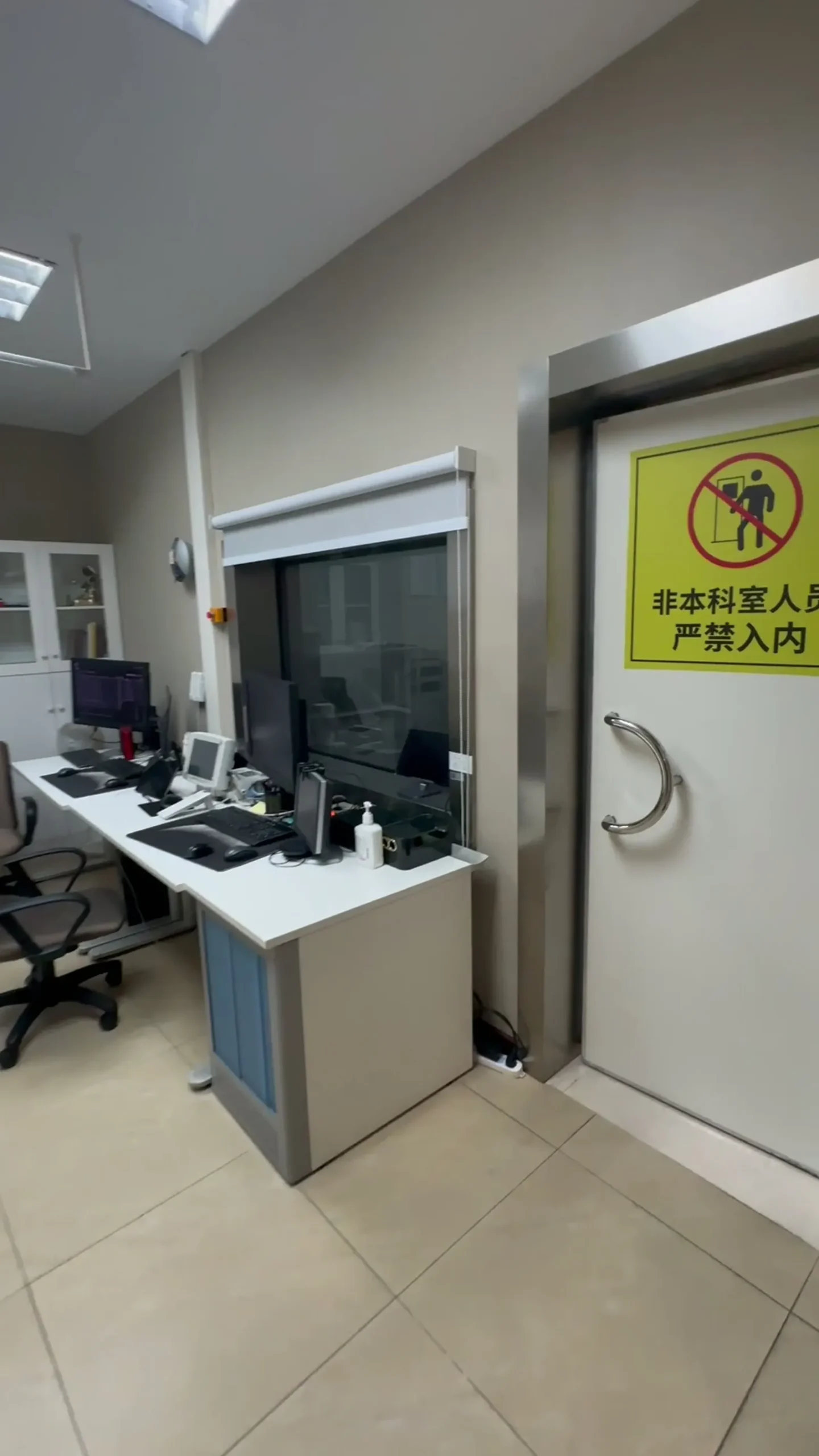
- CT and imaging scan room in a Chinese medical centre with a white scanner and a control console – QGO Medical — Real photograph taken on site at a QGO partner medical centre in China. Courtesy of the centre.
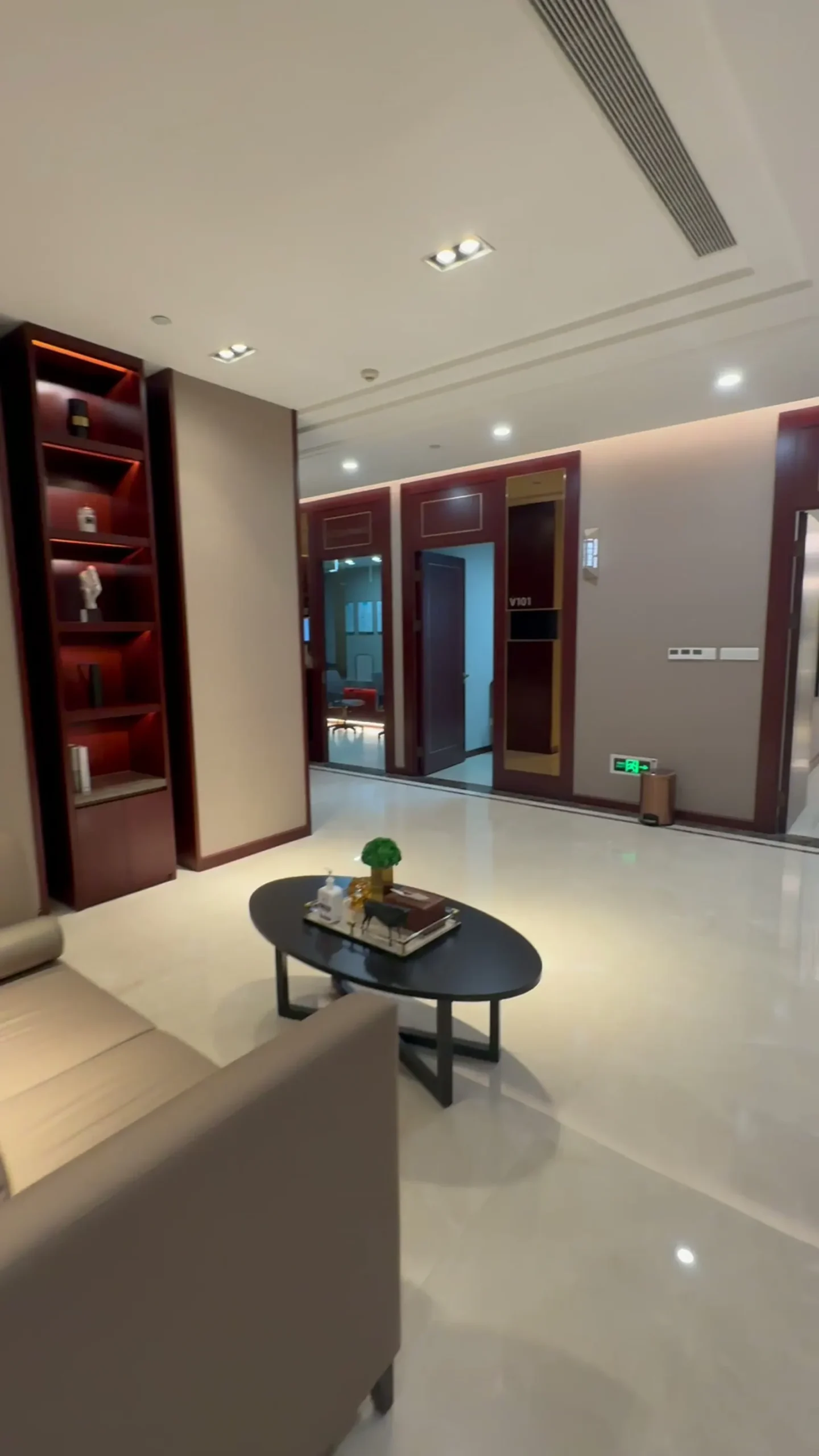
- Waiting area in a health check-up centre in China with a sofa, a low table, a display cabinet and a numbered consultation room door (V101) – QGO Medical — Real photograph taken on site at a QGO partner medical centre in China. Courtesy of the centre.
Disclaimer / 医疗免责声明
English: This page is for informational purposes only and does not constitute medical, immigration, legal, insurance, or tax advice. QGO Medical China provides coordination support only. We do not diagnose, treat, prescribe, provide emergency care, rank hospitals, issue visas, determine immigration eligibility, or promise any outcome. This page explains the structure of a written China health check-up plan. A health check-up is screening rather than a diagnostic evaluation, and a written list describes scope and cost rather than medical suitability. Whether a home-country physician accepts or acts on a report is decided by that physician. A quoted package price is an estimate, not a final bill (估算不是最终账单, 最终收费以医院确认为准). QGO does not rank hospitals and does not decide which tests any individual should have. For emergencies, call 120 in China, 911 in the United States, or 999 in the United Kingdom, or go to the nearest emergency department. Before making medical decisions, consult your local physician.
中文: 本页面仅供参考, 不构成医疗、移民、法律、保险或税务建议。QGO Medical China 仅提供协调支持, 不诊断、不治疗、不开处方、不提供急救、不做医院排名、不签发签证、不判断入境资格, 也不承诺任何结果。 This page explains the structure of a written China health check-up plan. A health check-up is screening rather than a diagnostic evaluation, and a written list describes scope and cost rather than medical suitability. Whether a home-country physician accepts or acts on a report is decided by that physician. A quoted package price is an estimate, not a final bill (估算不是最终账单, 最终收费以医院确认为准). QGO does not rank hospitals and does not decide which tests any individual should have. 中国境内紧急医疗情况请拨 120(中国)/ 911(美国)/ 999(英国), 或前往最近的急诊科。做出医疗决定前, 请咨询您本地的医生。
Cross-border care note / 跨境医疗注意: Before making medical decisions, consult your local physician. Pricing, hospital choice, report delivery, follow-up and travel feasibility depend on provider assessment, personal history, official policy, and your home-country care plan.