
China Medical Records Translation and Second Opinion: How to Prepare Your Records
A second opinion in China is only as useful as the records that come with it. This guide covers what to bring from home, how medical records and imaging are translated and exported, what happens during records review at a Chinese hospital, and where QGO’s role ends and your clinician’s begins.
QGO Medical China provides coordination support only. We do not provide medical diagnosis, clinical interpretation, or treatment. Every clinical decision stays with a licensed physician. If you are travelling for a second opinion and an existing diagnosis may be time-sensitive, do not wait for a consultation — contact a local physician first.
Original reports, imaging files, and lab results are what a reviewing physician needs. A summary of what someone already told you is not.
Printed films are for viewing. Home-country radiology review needs the DICOM media itself, plus the radiology report.
Translation scope has to be agreed with the hospital before you travel, because it affects cost and turnaround.
What does a second opinion in China actually involve?
A second opinion means a licensed Chinese physician reviews the records and imaging you bring, or examines you in person, and gives an independent view of your situation. It is not a treatment booking and it is not a guarantee of any result. The two practical routes are a records review before you travel, or an in-person specialist consultation after you arrive. Many visitors start with the first because it is faster and cheaper, then decide whether to travel at all.
What makes the difference in quality is the material you bring. A physician reviewing a case cannot work from a verbal description of someone else’s findings. They need the report as written, the numbers as measured, and the images in a format they can open. That preparation work — not the consultation itself — is where most cross-border cases go wrong.
Which documents should you prepare before travelling to China?
Prepare the complete set, not the parts that seem important. A reviewing physician may need the history even when the current question is about one imaging finding. The following list is the minimum we would want a visitor to assemble before contacting a hospital.
| Document or file | Why it matters to the reviewing physician | What to check before you send it |
|---|---|---|
| Latest imaging report (CT, MRI, ultrasound, X-ray) | It states what was seen, in what plane, and with what measurements. Measurements are what a second opinion is usually about. | That it is the radiology report, not the ordering doctor’s summary, and that the report text and the images are the same study |
| Imaging files in DICOM format | The report is a description; the images are the evidence. A reviewing physician usually wants to open the series themselves. | That you have DICOM media (CD, DVD, USB or a transfer link), not only printed film or screenshots |
| Laboratory results | Trends across time usually carry more signal than a single value, and reference ranges differ between laboratories and countries. | That the units are printed on the result, and that you keep earlier results, not only the newest |
| Pathology or biopsy report | If tissue was sampled, the report and the slides are the case. A second opinion on tissue is a specialist review. | That you have the written pathology report, and ask the hospital about slide review separately — slides are often kept at the original hospital |
| Discharge summary or operative note | It records what was done, what was found, and what was recommended. It is often the document a surgeon actually reads first. | That it is the formal summary from the treating institution, in the original language |
| Medication list and current dose | Interaction and safety review starts here, and some herbs and drugs do not combine well. | That it includes supplements and non-prescription items, with doses and frequency |
| Allergy and adverse reaction history | Contrast media, anaesthesia agents and antibiotics all depend on this record. | That it names the reaction, not just the substance — “rash” and “anaphylaxis” are not the same entry |
| Referral letter or clinic summary, if you have one | It states the question your home clinician is asking, which is what makes a second opinion targeted rather than general. | That it names the specific question being asked of the Chinese physician |
A useful discipline here: keep the original files and the translated files side by side rather than replacing one with the other. If the reviewing physician asks a question about a specific number in a lab result, being able to point at the original avoids a round of back-and-forth.
How does medical record translation work in China?
Translation in this context has two separate jobs, and they are priced and scheduled differently. The first is the written report: a physician-facing document that needs accurate medical terminology, correct units, and a faithful rendering of what the original clinician concluded. The second is the imaging: for cross-border radiology review, the images themselves may need to be exported and reformatted, which is a different technical task from translating a page of text.
The second half matters more than visitors expect. Translation services usually cover the written document. Getting the imaging into a format a receiving hospital can actually open — DICOM export from the original scanner, with the correct series and the study intact — is handled by the imaging department at the hospital where the study was done. This is why the answer to “can you send me my scan” is often “ask the radiology department for the DICOM media”, and why this request should be made before you leave your home country rather than on arrival.
Two practical points follow. First, if your imaging was done at a clinic or imaging centre rather than a hospital, ask that facility for DICOM media at the time of the appointment — years later, retrieving them can be difficult or impossible. Second, keep the radiology report even when you have the images. The images show what was seen; the report shows what the reading radiologist concluded about it, and a second opinion is often a disagreement about the conclusion rather than the images.
What happens during records review at a Chinese hospital?
Records review in China usually follows a predictable shape. The hospital verifies who you are and what you are asking about. Your documents are organised and, if translation is needed, translated or presented in a form the reviewing department can work with. The reviewing physician reads the report and opens the images. You then receive the reviewer’s opinion, either in person or in writing, depending on the department and the arrangement you made before travelling.
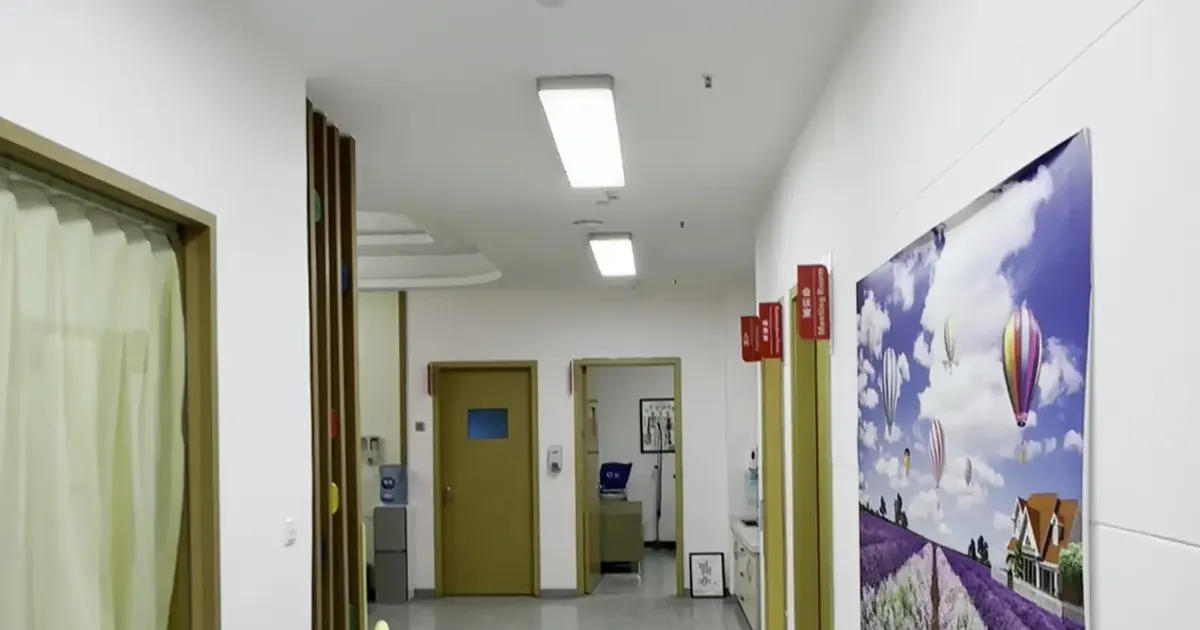
What varies is the interface around the review. Public tertiary hospitals in major cities usually have formal medical-record departments (病案室) that handle copying, translation requests and archiving. Private international hospitals and some clinics handle the same work more informally, as part of a patient-facing service. Ask before you travel which of the two you will be dealing with, because it determines whether you can obtain your imaging on short notice or whether you need to order it from the original institution first.
One point is worth stating plainly, because it is the one most often misunderstood by visitors: Chinese hospitals generally issue reports and medical documentation in Chinese. There is no universal right to an English version, and where an English report is available it is usually an additional service with its own cost and turnaround. If your home clinician needs English documents to act on them, that requirement should be raised before the visit rather than at the counter.
What does QGO coordinate, and what stays with your clinician?
The boundary matters more here than for most coordination work, because a records review sits close to clinical work. QGO coordinates the non-clinical process around it: which documents a hospital needs, in what format, in what order, and how they are requested and transferred. We help with English communication on the workflow, document preparation and assembly, and we explain expected steps where we can. We do not issue medical reports — those come from the treating institution — and we do not interpret imaging, labs or pathology, or offer a clinical opinion.
That means a QGO second-opinion coordination is an administrative and logistics service around a medical review. The opinion itself, and whether to act on it, belongs to a licensed physician. If a question needs clinical judgement before you travel — for instance whether a symptom you have now needs urgent care — that is a question for a doctor, not for a coordinator, and not for a travel plan.
Two separate questions, two separate owners
Non-clinical coordination — document lists, translation arrangements, imaging export requests, appointment routing, English communication on the process, and delivery logistics. This is what QGO coordinates, and it is where most of the avoidable delay actually sits.
Clinical judgement — what your findings mean, whether treatment is needed, whether to travel at all, and how to act on any opinion you receive. This stays with licensed physicians in China and with your home-country clinician.
For the report side of a health check-up specifically, the seven-item package a visitor should expect to leave with is set out separately, including the English report, the Chinese original, lab results, DICOM files, the invoice, the follow-up plan, and the abnormal-result pathway. Getting those seven items is often more useful for a home-country clinician than a second opinion arranged separately.
How do you prepare records for a second opinion in China?
Put the preparation in this order. First, gather the complete document set listed above from every institution that has seen you, not only the most recent one. Second, confirm the imaging export — that DICOM media exist and that you hold them, and that the report refers to the same study. Third, write the question you want answered in one or two sentences, because a targeted second opinion and a general review are different requests and are often scheduled differently. Fourth, agree with the hospital, before you pay anything, whether translation is included, what it costs, and how long it takes. Fifth, keep everything organised in one folder with a simple index, so nothing has to be searched for during a short appointment.
Plan the timing around the third-party dependencies rather than around your flight. Records review can require a radiology department to retrieve files from storage, and translation can require a translator who is not on site every day. If you are travelling on a fixed date, build in days of margin on the Chinese side rather than compressing the schedule on your side.
What are the common mistakes in records review?
Most cross-border records problems come from one of four causes. Bringing only the summary and not the imaging: the physician can read what the first opinion said but cannot check it. Bringing printed film instead of DICOM: the images cannot be opened, so the review becomes a document reading exercise with a limited value. Not asking about translation before travel: the expectation of an English report by default is a common and expensive surprise. And treating the coordinator as the clinician: requests that need clinical judgement, such as whether a finding is urgent, are answered as though they were logistical questions.
None of these is complicated. All of them are avoidable, and each one is decided in the weeks before departure rather than at the hospital desk.
Frequently asked questions
Can QGO translate my medical records for me?
QGO coordinates records review, document assembly and translation arrangements with the hospital that will review your case. We do not issue medical reports ourselves, and we do not provide clinical interpretation of imaging, laboratory results or pathology. Ask for the translation scope to be confirmed with the hospital before travel, because it affects cost and turnaround.
Will I get an English copy of my Chinese hospital report?
Chinese hospitals generally issue documentation in Chinese, and an English version is usually an additional service rather than an automatic part of the record. If your home clinician needs English documents to act on them, raise it before the visit and confirm what the hospital can provide and on what timeline.
Do I need DICOM files if I only want a written opinion?
It depends on the question. If your question is about a report conclusion — for example whether a finding was read correctly — the written report may be enough. If the question is about the images themselves, such as whether a lesion measurement is accurate, then DICOM media are usually what the reviewing physician needs, because a printed film cannot be re-measured with the original series in view.
Can QGO arrange a second opinion while I am still at home?
Yes. A records-only review is a common arrangement and avoids the travel cost for cases where the question can be answered from the documents. Whether a hospital will accept a remote records review, and what it requires, varies by department, so it is worth confirming before you commit to a date.
What if my imaging was done years ago?
Retrieve it while you still can. Imaging archives do not keep studies indefinitely, and a clinic that closed may no longer be able to retrieve files at all. If the images cannot be obtained, the reviewing physician will be working from the written report alone, which limits what a second opinion can add.
Who decides whether I actually need a second opinion?
That is a clinical question and it belongs to a doctor, either your home-country clinician or a licensed physician in China. We can help with the coordination, the document set and the workflow, but we do not give medical advice. If you have symptoms that are severe or worsening, seek medical care rather than arranging a travel review.
Before you contact a hospital
Have the document set above assembled, the imaging export confirmed, and the question written down in one or two sentences. Those three things make a records review useful instead of slow and inconclusive.
References
Sources were reviewed for medical-record handling, translation practice, patient safety and cross-border care context. Last reviewed: 2026-11-02.
- The State Council of the PRC (English portal)
- National Health Commission of the PRC
- Beijing Municipal Health Commission (北京市卫健委)
- Shanghai Municipal Health Commission
- West China Hospital, Sichuan University (华西医院)
- Huashan Hospital, Fudan University (华山医院)
- Peking Union Medical College Hospital (北京协和医院)
- Peking University International Hospital (北京大学国际医院)
- World Health Organization
- U.S. CDC Travelers’ Health
- Joint Commission International
- Medical Tourism Association
Image credits / 图片来源
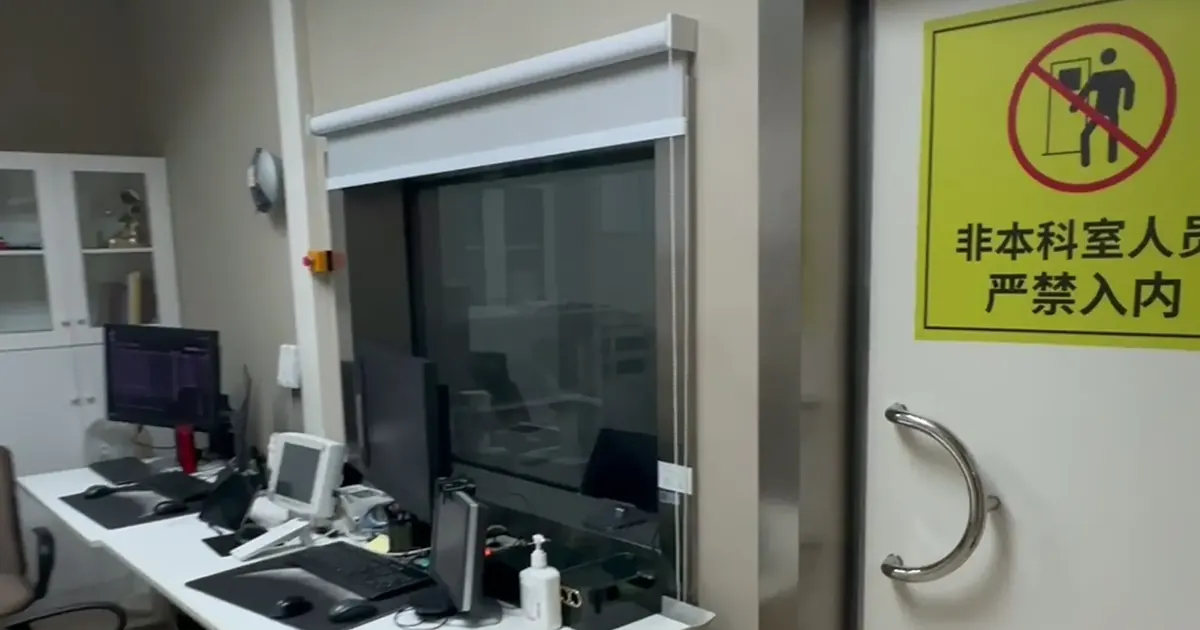
- Real photograph — CT and imaging scan room in a Chinese medical centre with a white scanner and a control console – QGO Medical — Real photograph taken on site at a QGO partner medical centre in China. Courtesy of the centre.
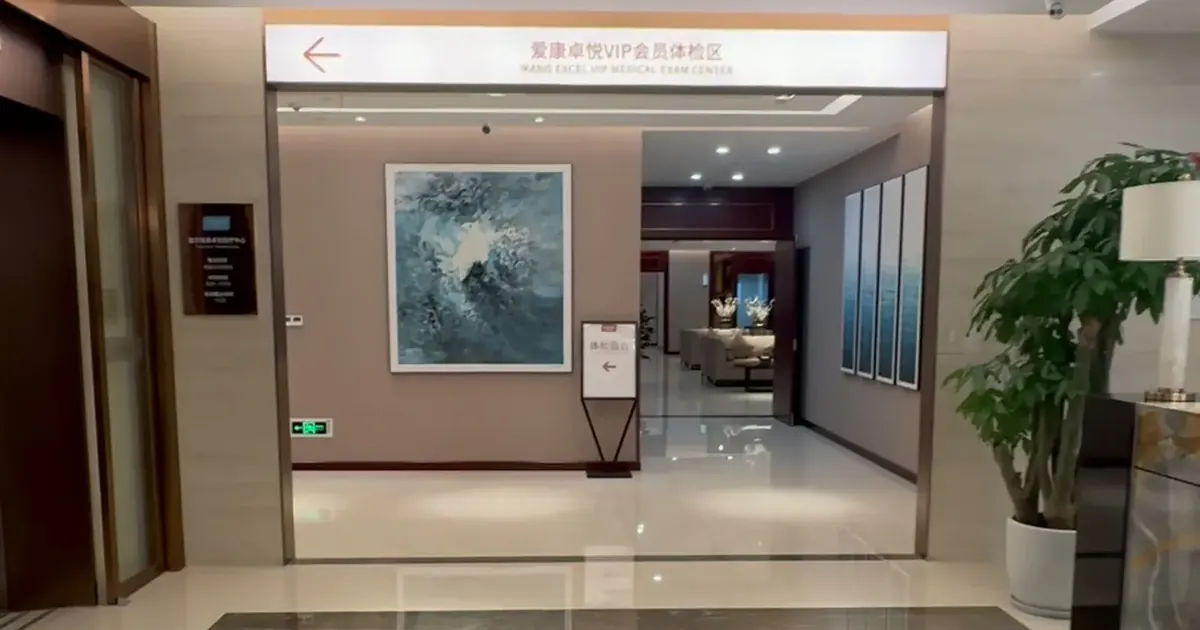
- Real photograph — Entrance to the VIP health check-up area at a partner medical centre in China, with bilingual Chinese-English signage and a marble floor and a marble floor – QGO Medical — Real photograph taken on site at a QGO partner medical centre in China. Courtesy of the centre.
- Real photograph — Hospital corridor in China with wooden doors, Chinese department signs and wayfinding boards – QGO Medical — Real photograph taken on site at a QGO partner medical centre in China. Courtesy of the centre.
Disclaimer / 医疗免责声明
English: This page is for informational purposes only. A second opinion is a clinical review performed by a licensed physician, and nothing here is medical advice. QGO Medical China provides coordination support only. We do not diagnose, do not interpret imaging, laboratory results or pathology, do not provide treatment, do not issue medical reports, and do not promise outcomes or that a second opinion will be available or conclusive. Reports and medical documentation are issued by the treating medical institution. Translation and records review arrangements depend on the hospital and are confirmed with it directly. Before making medical decisions, consult your own licensed physician. If you have severe or rapidly worsening symptoms, seek medical care rather than arranging a travel review. In an emergency, call 120 in China, 911 in the United States, 999 in the United Kingdom, or go to the nearest emergency department.
中文: 本页内容仅供一般性信息参考。第二诊疗意见是由执业医师完成的临床审阅,本页任何内容均不构成医疗建议。QGO Medical China 仅提供就医协调服务,不做诊断、不解读影像/化验/病理结果、不提供治疗、不出具医疗报告、不承诺疗效,也不保证第二诊疗意见一定能安排或得出结论。医疗报告与病历文件由接诊医疗机构出具。翻译与病历审阅的具体安排取决于医院,需与医院直接确认。医疗决策前请咨询您自己的执业医师。如症状严重或快速加重,请及时就医,不要等待旅行安排。紧急情况请拨打:在中国 120,在美国 911,在英国 999,或前往最近的急诊科。
Cross-border care note: Whether a records review is appropriate, which documents are sufficient, how long translation and archiving take, and whether you should travel at all depend on your individual condition, the hospital’s assessment, and your local care plan.
Editorial Review / 撰稿审核
Author / 撰稿: QGO Medical Editorial Team
Reviewed by: QGO Operations Lead
Last reviewed: 2026-11-02
Next review: 2026-12-02 (A-tier PILLAR monthly review)