
Full Mouth Dental Implants China: A 2026 Cost and Process Guide
Full mouth dental implants are one of the largest dental decisions an international patient can make. The treatment may involve surgery, temporary teeth, healing, final prosthesis design, bite adjustment, and years of maintenance. For visitors comparing full mouth dental implants in China with the US, Canada, the UK, Europe, or Australia, the question is not only whether the reference price is lower. The more important question is whether the case can be assessed, planned, quoted, treated, and followed up safely across borders.
QGO Medical China provides coordination support only. QGO is not a dental clinic, hospital, dentist, diagnosis provider, treatment provider, insurer, or emergency service. Final suitability, diagnosis, surgical planning, material selection, treatment timing, and aftercare instructions must come from licensed dental professionals after appropriate assessment.
This pillar guide explains what counts as full mouth dental implant restoration, how All-on-4 and All-on-6 compare with individual implants or implant dentures, what cost ranges international patients may see, what questions to ask before travel, and how to plan English-language follow-up after leaving China.
What Counts as Full Mouth Dental Implant Restoration?
Full mouth dental implants usually refers to implant-supported replacement of most or all teeth in the upper jaw, lower jaw, or both jaws. It is different from replacing one missing tooth. A full mouth dental implants plan may involve a full arch bridge, implant-supported denture, staged bone grafting, extraction of failing teeth, temporary teeth, final prosthesis design, and long-term hygiene maintenance.
Patients often use the phrase loosely. Some mean a fixed full arch supported by four or six implants. Some mean individual implants replacing several missing teeth. Others mean a removable denture that snaps onto implants. The correct category depends on remaining teeth, jawbone volume, bite force, gum health, medical history, budget, and the patient's ability to return for checks.
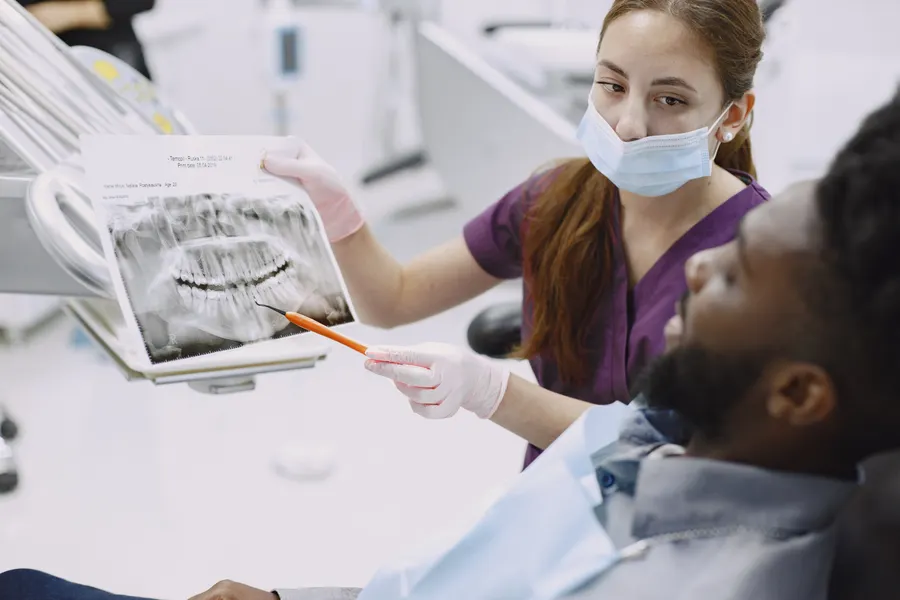
Before asking for a quote, international patients should prepare:
- Passport name for appointment registration
- Travel dates and expected length of stay
- Current symptoms, chewing difficulty, loose teeth, denture problems, or pain
- Panoramic X-ray or CBCT scan if available
- Photos of the smile, bite, upper arch, lower arch, and existing dentures
- Dental history, including extractions, implants, bone grafting, gum disease, or failed crowns
- Medication list, allergies, smoking status, diabetes history, heart conditions, and blood thinner use
- Treatment goals, such as fixed teeth, removable denture improvement, or staged reconstruction
These materials do not replace an in-person exam. They help a coordinator and provider category understand whether the inquiry is realistic and what cannot be confirmed until clinical assessment.
Top Full Arch Options: All-on-4, All-on-6, Individual Implants, and Snap-On Dentures
Full arch implant treatment is not one procedure. It is a family of options. Each option has different planning needs, cost structure, surgical burden, prosthesis design, and follow-up requirements.
| Option | What it means | Typical fit | Main planning question |
|---|---|---|---|
| All-on-4 | Four implants support a fixed full arch bridge | Some full arch cases where implant position and bone allow a fixed restoration | Is bone volume and implant position suitable without adding unnecessary risk? |
| All-on-6 | Six implants support a fixed full arch bridge | Some patients with adequate bone and a need for broader support | Does the patient benefit from additional implants, or does it add cost and surgery without enough value? |
| Individual implants | Multiple implants replace individual missing teeth or segments | Partial full-mouth reconstruction where some natural teeth may remain | Which teeth should be saved, extracted, or restored? |
| Implant-supported overdenture | A removable denture clips or snaps onto implants | Patients seeking better denture stability with lower surgical or prosthetic scope | Is the patient comfortable with a removable appliance? |
| Staged reconstruction | Extractions, grafting, implants, temporary teeth, and final teeth are separated into phases | Complex cases with bone loss, infection, bite collapse, or medical issues | Can the patient travel enough times for safe staging and review? |
All-on-4 and All-on-6 are often marketed heavily because they sound simple. In reality, a licensed implant dentist still needs to check bone volume, nerve position, sinus location, bite force, gum tissue, hygiene ability, and medical risk. A full arch plan that looks attractive online may not be suitable for a patient with uncontrolled periodontal disease, severe bone loss, heavy grinding, or unstable medical conditions.
The $100 Dental Implant Consultation Deposit is a deposit for consultation coordination only. It is not the full treatment fee and should not be interpreted as a final implant quote.
Cost Comparison: Single Jaw, Both Jaws, and Full Mouth Reference Ranges
Full mouth dental implants prices vary widely because the phrase can refer to different treatment scopes. A single arch may mean upper jaw only or lower jaw only. Both jaws may mean full upper and lower fixed arches. Some quotes include extractions, sedation, temporary teeth, and final zirconia, while others separate those items.
The table below uses reference ranges only. Final pricing depends on dentist assessment, clinic category, city, implant system, number of implants, bone condition, extraction needs, grafting, scans, surgical guide, temporary prosthesis, final material, lab work, bite adjustment, and follow-up needs.
| Scope | US / Canada estimated range | UK / EU / Australia estimated range | China QGO reference range |
|---|---|---|---|
| Full arch All-on-4, one jaw | USD 12,000-30,000+ | USD 10,000-28,000+ | USD 6,000-15,000 estimated range |
| Full arch All-on-6, one jaw | USD 16,000-40,000+ | USD 13,000-35,000+ | USD 8,000-18,000 estimated range |
| Both jaws fixed full arch | USD 28,000-70,000+ | USD 24,000-60,000+ | USD 12,000-32,000 estimated range |
| Implant-supported overdenture | USD 8,000-25,000+ | USD 7,000-22,000+ | USD 4,000-14,000 estimated range |
| Complex staged full-mouth reconstruction | USD 40,000-100,000+ | USD 35,000-90,000+ | Custom quote after records and clinical assessment |
Lower reference prices do not automatically mean lower total cost. International patients should include flights, hotel stay, local transport, time away from work, revision risk, and the cost of follow-up with a dentist at home. For full arch cases, patients may also need more than one China trip if healing, implant integration, or final prosthesis delivery cannot be completed safely in a short visit.
Ask whether a quote includes:
- Consultation and diagnostic scans
- Tooth extraction
- Bone grafting or sinus lift if needed
- Implant brand and number of fixtures
- Temporary teeth
- Final bridge, denture, or prosthesis
- Zirconia, acrylic, titanium bar, or hybrid material
- Anesthesia or sedation
- Medication
- Follow-up visits
- English-language reports and implant system documentation
- Adjustment policy after returning home
For single-implant reference context, see the Dental Implants in China Price Guide. Full arch cases are more complex than single-tooth replacement and should not be priced by multiplying one implant price by the number of missing teeth.
Who May Be a Candidate for Full Mouth Dental Implants?
Candidate assessment is clinical. A travel article cannot determine whether a patient is suitable. A licensed dentist or oral surgeon may need to review bone quantity, bone quality, gum health, bite force, jaw relationship, medical history, current infection, remaining teeth, and patient expectations.
Common factors that may affect suitability include:
- Jawbone volume and density
- Sinus position in the upper jaw
- Nerve position in the lower jaw
- Gum disease or untreated infection
- Smoking history
- Diabetes control
- Blood thinner use or immune-related medication
- Bruxism or heavy grinding
- Ability to clean under a full arch bridge
- Ability to attend follow-up visits
- Willingness to accept temporary teeth during healing
Age alone does not decide suitability. A healthy older patient may be a better candidate than a younger patient with uncontrolled gum disease or unstable medical conditions. The decision should be based on case-specific assessment and the visitor's own licensed clinicians where relevant.
Some patients are not ready for implant surgery immediately. They may need periodontal treatment, extractions, infection control, medical clearance, smoking reduction, bite evaluation, or additional imaging before a full arch plan is realistic.
Procedure Timeline: Consultation, Surgery, Healing, and Final Prosthesis
The full mouth dental implant timeline can range from several months to more than a year. Some cases include same-day temporary teeth, but that does not mean the entire process is complete in one day. The final prosthesis often requires healing, implant integration, bite checks, lab work, and later fitting.
| Stage | What usually happens | Cross-border planning issue |
|---|---|---|
| Pre-review | Records, photos, X-rays, medical history, travel window | Only preliminary. Final decisions require clinical exam. |
| In-person consultation | Oral exam, scans, treatment planning, quote clarification | Patient should understand what is included and excluded. |
| Surgery or extractions | Implants placed, teeth removed if needed, temporary prosthesis may be fitted | Recovery time and complication pathway must be planned. |
| Healing period | Soft tissue healing and implant integration | Patient may return home but needs clear follow-up instructions. |
| Final prosthesis | Final bridge, denture, or restoration is fitted and adjusted | May require another visit or coordinated local checks. |
| Maintenance | Cleaning, screw checks, bite checks, hygiene review | Long-term care usually requires a local dental relationship. |
The timeline depends on bone condition, number of arches, whether failing teeth must be removed, whether grafting is needed, and whether temporary teeth are clinically appropriate. A short travel window may work for consultation and planning, but it may not be enough for definitive full mouth reconstruction.
QGO can help visitors organize appointment timing, route planning, English communication needs, and record preparation. Clinical timing is decided by licensed dental professionals.
Material Options: Titanium, Zirconia, Acrylic, and Hybrid Designs
Full mouth dental implant treatment involves both implant fixtures and the visible prosthesis. The implant fixtures are commonly titanium or titanium alloy, although some patients ask about zirconia implants in specific cases. The visible full arch restoration may be acrylic, zirconia, ceramic, metal-reinforced, or hybrid.
Material choice affects cost, weight, repairability, appearance, fracture risk, and how the bite feels. A lower-cost acrylic temporary bridge is not the same as a final zirconia prosthesis. A final zirconia bridge may cost more, but it also requires careful bite planning and lab precision.
Questions to ask include:
- Which implant system is being used?
- Is the quoted price for temporary teeth or final teeth?
- Is the final prosthesis acrylic, zirconia, ceramic, or hybrid?
- Is there a titanium bar or metal reinforcement?
- What happens if a tooth chips after travel?
- Can a local dentist identify the implant system later?
- Will the patient receive documentation for parts and materials?
International patients should avoid choosing based only on material prestige. A material that looks attractive online may not suit every bite, jaw, or hygiene pattern. The suitable material is a clinical decision, not a travel package decision.
Why Some Patients Consider China for Full Mouth Implants
Patients usually consider full mouth dental implants in China because local quotes in the US, Canada, the UK, Europe, or Australia can be high, especially for both-jaw fixed full arch treatment. China may offer lower reference prices, modern urban dental facilities, digital imaging, imported and domestic implant systems, and service models used to international residents or visitors.
That does not make China the right choice for every patient. A lower reference range is only useful when the patient can compare the treatment scope, understand what is included, plan enough time, and arrange follow-up. A full mouth implant plan across borders requires more discipline than a simple dental cleaning or whitening visit.

Important comparison questions include:
- Is the provider category suitable for complex implant surgery?
- Is there English-language support for consent, treatment explanation, and aftercare?
- Are scans and implant documentation provided?
- Can the patient stay long enough for recovery checks?
- What happens if pain, swelling, prosthesis looseness, or bite issues occur after returning home?
- Does the patient have a local dentist willing to provide maintenance?
For broader destination planning, the Dental Tourism in China Guide explains how international visitors compare dental travel options without assuming one country is always better or cheaper.
Risks and Questions to Ask a Dentist Abroad
Full mouth implant treatment is invasive and irreversible in many cases. Teeth may be removed. Bone may be reshaped. Implants may require months of integration. A full arch prosthesis changes bite, speech, cleaning habits, and long-term dental maintenance.
Key risks and uncertainties may include:
- Infection, swelling, bleeding, or delayed healing
- Implant failure or need for removal
- Nerve injury or altered sensation
- Sinus complications in upper jaw cases
- Bite discomfort or prosthesis fracture
- Difficulty cleaning under a fixed bridge
- Need for future screw tightening or part replacement
- Temporary teeth not feeling like final teeth
- Need for additional visits after travel
Questions to ask before committing:
- What parts of the plan are confirmed now, and what requires in-person examination?
- How many implants are planned per arch, and why?
- What imaging is required before surgery?
- Is bone grafting or sinus lift likely?
- What material is used for temporary teeth and final teeth?
- What is included in the quote, and what may be billed separately?
- What symptoms require urgent local care?
- What records will I receive before leaving China?
- Who handles questions after I return home?
- What maintenance should my local dentist perform?
A provider should be willing to explain limits, uncertainties, and alternatives. A plan that promises the same timeline, same result, or same fee for every patient is not a responsible basis for full mouth implant travel.
Aftercare and Follow-Up Across Borders
Aftercare is often the weakest part of dental tourism planning. Full mouth dental implants require cleaning technique, bite checks, prosthesis maintenance, and monitoring for inflammation or looseness. Patients should not assume that remote messaging can solve every post-surgical or prosthetic issue.
Before leaving China, request:
- Implant brand and system documentation
- Scan files or X-rays where appropriate
- Written surgical summary if available
- Prosthesis material details
- Medication and aftercare instructions
- Warning signs that require urgent care
- Follow-up schedule
- Hygiene instructions for fixed bridge or overdenture
- Contact pathway for non-urgent questions
Severe pain, facial swelling, fever, uncontrolled bleeding, breathing difficulty, trauma, or acute infection symptoms require local emergency care or a licensed clinician. QGO does not provide emergency treatment and cannot replace local dental or medical services.
For service boundaries, privacy handling, and coordination limits, review the QGO Trust Center and FAQ.
Related Procedures (More Specific Guides)
These cluster pages are planned as supporting guides. Placeholder URLs should be replaced after each cluster article is published.
- Same Day Dental Implants China – for patients asking whether immediate temporary teeth are realistic
- All-on-4 Dental Implants China (coming soon) – for the most searched full arch option
- Screwless Dental Implants (coming soon) – for patients asking about alternative implant designs
- Mini Dental Implants (coming soon) – for narrower jaw or denture-support questions
- Affordable Dental Implants Near Me (coming soon) – for cost-focused comparison intent
- Dental Implants Specialist (coming soon) – for evaluation and provider category questions
How QGO Medical China Can Help
QGO Medical China supports international visitors with coordination, not dental treatment. For full mouth implant inquiries, coordination may include collecting basic case details, helping the visitor understand which records may be useful, checking appointment pathways, clarifying reference price boundaries, and supporting English-language communication where available.
A practical inquiry flow may include:
- Share travel dates, target city, and dental goals.
- Prepare photos, X-rays, CBCT if available, dental history, and medication history.
- Clarify whether the inquiry is for one jaw, both jaws, fixed bridge, removable overdenture, or staged reconstruction.
- Review reference price boundaries and likely variables.
- Arrange consultation pathway if the visitor chooses to proceed.
- Support follow-up communication after records or instructions are issued.
QGO does not decide whether a patient is a candidate, choose implant positions, provide diagnosis, perform surgery, prescribe medication, or provide emergency care. Those decisions and services belong to licensed dental professionals.
FAQ
How much do full mouth dental implants cost in China?
QGO reference ranges for full mouth dental implants in China may start around USD 12,000-32,000 for both jaws, depending on case complexity, implant system, number of implants, material choice, city, clinic category, scans, grafting, temporary teeth, final prosthesis, and follow-up needs. This is not a final quote. A licensed dentist must assess the case before confirming treatment scope and pricing.
Is All-on-4 cheaper than individual full mouth implants?
All-on-4 may use fewer implants per arch than replacing many teeth individually, so it may reduce surgical and prosthetic scope in some cases. It is not automatically suitable for every patient. Bone condition, bite force, gum health, hygiene ability, and the dentist's assessment determine whether All-on-4, All-on-6, overdenture, or staged reconstruction is appropriate.
Can full mouth dental implants be completed in one trip?
Some cases may include same-day temporary teeth after implant placement, but final full mouth restoration usually involves healing, checks, lab work, and later fitting. Many patients should expect a multi-stage process. Travel timing should be confirmed only after clinical assessment.
Are full mouth dental implants suitable for older adults?
Age alone does not determine suitability. A licensed dentist or oral surgeon may evaluate bone volume, gum health, medical history, medication use, diabetes control, smoking status, and ability to maintain hygiene. Older adults may be candidates in some cases, while younger patients with active disease or unstable health may need treatment before implant planning.
What records should I send before traveling to China?
Useful records include panoramic X-rays, CBCT scans if available, photos of the mouth and smile, medication history, allergies, dental history, denture history, prior implant records, and expected travel dates. These records support pre-review but do not replace an in-person dental exam.
Does QGO recommend a specific implant dentist or hospital?
QGO does not publicly rank, endorse, or promise outcomes from any specific dentist, hospital, or clinic. QGO provides coordination support, helps international visitors understand provider categories and planning questions, and assists with communication where available. Clinical recommendations and treatment decisions belong to licensed dental professionals.
QGO Medical China provides coordination support only. We do not provide medical diagnosis, treatment, or emergency care. All medical decisions should be made in consultation with a licensed physician or licensed dental professional.