
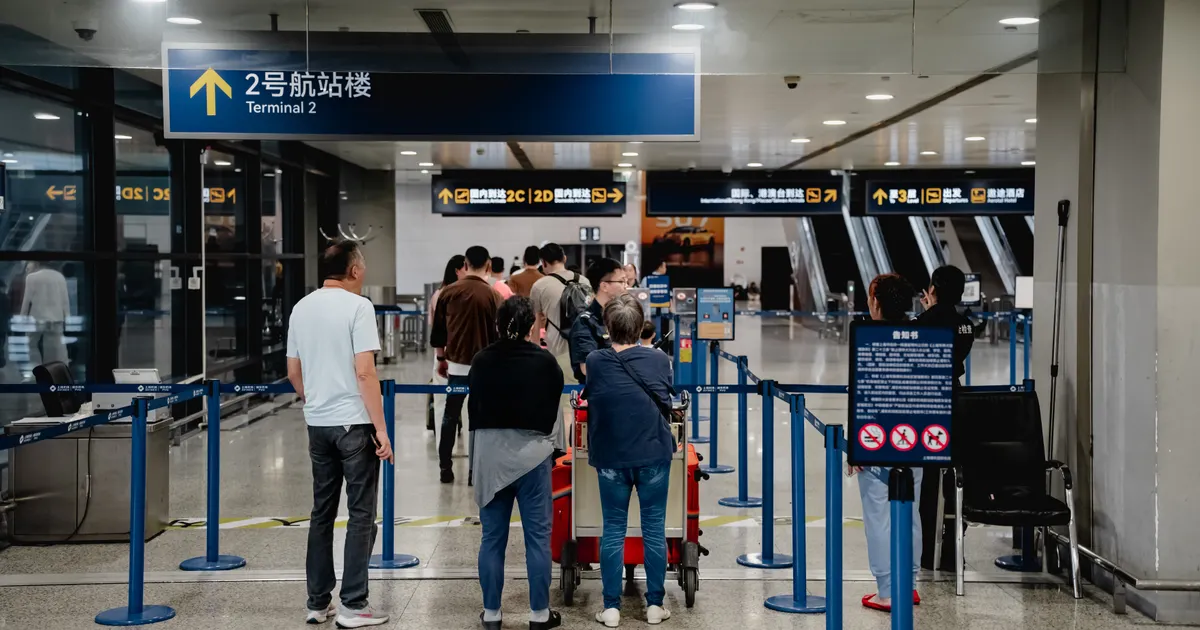
International Insurance Direct Billing in China 2026: What You Need to Confirm
2026 guide to international insurance direct billing in Chinese hospitals — three conditions, four insurance types, Lecheng pilot boundary, QGO coordination path, and final disclaimer.
QGO Medical China provides coordination support only. We do not provide medical diagnosis, dental treatment, emergency care, immigration advice, or guaranteed outcomes. All medical decisions should be made in consultation with licensed professionals.
What "Direct Billing" Means in a Chinese Hospital Context
International insurance direct billing China hospital is a specific arrangement where the hospital settles the bill directly with the patient international insurer, instead of the patient paying upfront and then claiming reimbursement. It is convenient when it works, but it is the exception rather than the default in Chinese hospitals.
The first thing to clarify is what “direct billing” actually delivers. In a true direct billing arrangement, the hospital accepts a Guarantee of Payment (GOP) issued by the insurer, treats the patient, and sends the bill to the insurer for settlement. The patient does not pay the hospital at the visit; the patient pays only the policy excess, co-pay, or non-covered items.
In a non-direct-billing arrangement (which is the more common case), the patient settles the hospital bill in full at the visit, then files a claim with the insurer for reimbursement. Reimbursement timelines vary by insurer and by policy terms, typically two to eight weeks.
This page focuses on the three conditions, the four insurance-type differences, the Lecheng pilot boundary, and what QGO can and cannot coordinate. Before booking flights, verify the visa category, the chosen hospital tier, and the home-country medical-jurisdiction pathway with the licensed physicians involved.
The Three Conditions for Direct Billing: Hospital Acceptance, Insurer Authorisation, and Case Match
Three conditions must be met before any direct billing arrangement is feasible in a Chinese hospital. All three must be confirmed in writing before the visit.
Condition one — hospital acceptance. The hospital must be on the insurer network list. Not every Chinese hospital has direct billing agreements with every international insurer. Many JCI-accredited private hospitals in Beijing, Shanghai, Guangzhou, and Shenzhen have agreements with major international insurers; public tertiary hospitals usually do not.
Condition two — insurer authorisation. Even when the hospital is on the network list, the insurer typically reviews the case and issues a Guarantee of Payment (GOP) before the visit. Without GOP, the hospital may still ask for a deposit. GOP turnaround depends on the insurer; emergency GOPs may be issued same-day, elective GOPs usually take 3 to 10 working days.
Condition three — case match. Pre-existing conditions, cosmetic procedures, preventive check-ups, and certain chronic-disease treatments are commonly excluded. The policy clinical definitions determine coverage. A case that does not match policy terms will not be direct-billed even if conditions one and two are met.
The Trust Center explains QGO coordination boundary. QGO coordinates records review and hospital communication; QGO does NOT broker insurance, does NOT issue guarantees, and does NOT commit any insurer pre-authorisation.
Four Insurance Types and How They Differ in China
Four broad insurance categories drive different direct billing outcomes in Chinese hospitals. Visitors should identify which category their policy falls into before booking the visit.
Type one — international commercial health insurance (e.g., Cigna Global, Bupa Global, Aetna International). These policies are the most likely to support direct billing. Coverage depends on the specific plan, the network list, and the pre-authorisation process. Annual limits, deductibles, and co-pay structures vary.
Type two — international travel insurance. These policies are designed for short-stay trips and usually cover emergency care only. Preventive check-ups, planned procedures, and follow-up treatments are typically excluded. Direct billing is rare; reimbursement after self-pay is the norm.
Type three — employer-sponsored international health plans. Coverage depends on the employer policy and the employee eligibility. Some employer plans include direct billing networks; others require pre-authorisation through the employer HR or insurance broker. Confirm eligibility before travel.
Type four — self-pay. The visitor pays out-of-pocket and seeks reimbursement from any third-party coverage (home-country public system, private top-up, etc.). Direct billing is not applicable.
For visitors comparing policy coverage, the China Medical Travel Package page outlines how short-stay insurance differs from full international coverage. For payment boundary clarity, see Hospital Fee vs QGO Coordination Fee.
Lecheng Pilot Boundary: A Real But Limited Cross-Border Insurance Channel
The Lecheng (Boao / Hainan) pilot zone has drawn attention as a potential cross-border insurance channel. Visitors sometimes assume Lecheng-style direct billing is widely available across China; it is not. Lecheng is a defined geographic and institutional pilot.
The Lecheng model allows certain imported medical products, devices, and pharmaceuticals to be used within the pilot zone under specific cross-border insurance arrangements. The model has been extended in phases, and a small number of insurers now offer Lecheng-compatible policies. The practical impact is that some treatments and products available at designated Lecheng institutions may be partially covered under participating policies.
The boundary is important. Lecheng is not a nationwide direct billing programme. Most Chinese hospitals outside the Lecheng pilot do not operate under Lecheng arrangements. Visitors planning care outside Lecheng should not assume Lecheng coverage. Visitors planning care inside Lecheng should confirm that the specific hospital, the specific insurer, the specific treatment, and the specific imported product all fall within the pilot scope.
QGO coordinates records review and translation; QGO does NOT promise Lecheng eligibility, does NOT guarantee cross-border insurance approval, and does NOT issue any insurance product. For broader medical-trip context, see the China Health Check-up Process and Day in Life page.
QGO Coordination Path: Records Review and Translation, Not Direct Billing
QGO role in the international insurance direct billing context is bounded and explicit. QGO coordinates records review, hospital communication, and translation review. QGO does NOT broker insurance, does NOT issue guarantees, does NOT negotiate hospital fees, and does NOT replace the insurer pre-authorisation process.
What QGO does coordinate — appointment booking with the chosen hospital, hospital-side communication (department, international office, finance office), document preparation (medical history, prior imaging, prior reports), translation review (English summary, bilingual PDF, full translation), and follow-up scheduling (post-visit consultation, repeat imaging, second-opinion coordination).
What QGO does NOT do — pay hospital fees on the visitor behalf, bundle hospital fees into a QGO quote, issue any insurance product, contact the insurer on the visitor behalf without explicit written consent, or guarantee any insurer pre-authorisation decision.
For the wider view of how hospital fees and QGO coordination fees stay separate, see Hospital Fee vs QGO Coordination Fee. For the Trust Center page, see the full coordination boundary statement.
Direct billing is feasible only when all three conditions are confirmed. QGO can help coordinate the records review and the hospital communication; the insurer GOP and the policy terms remain the visitor and the insurer responsibility.
Direct Billing Eligibility: What Has to Be Checked Before You Travel?
Direct billing is a three-party arrangement between your insurer, the hospital, and you, and it only works when all three confirm the same thing in writing before you travel.
The table below lists the six checks that decide whether a plan can be direct-billed at all. Each check has a different owner, and each one can stop the arrangement on its own: a network agreement covers the hospital, a policy covers the case, and a written authorisation covers the date.
| Check | Who confirms it | Why it can stop the arrangement |
|---|---|---|
| Insurer (保险人) | Your own insurer, not the hospital. | Only the company that underwrites your policy can settle a claim directly with its network. A hospital’s willingness to accept direct payment says nothing about your policy. |
| Member status (患者身份) | Your insurer. | Family members and anyone travelling with you must be named or covered under the policy before they are treated. An unnamed traveller is handled as a self-paying patient. |
| Hospital and campus (医院/院区) | Your insurer together with the hospital’s international department. | The same hospital can run different campuses, and only some of them sit inside the insurer’s network list. |
| Department and service (科室与服务范围) | The hospital and the insurer. | Direct billing is usually limited to named departments and procedures. A screening check-up package is normally outside that list. |
| Pre-authorisation (预授权) | Your insurer, in writing. | Without written pre-authorisation the hospital usually asks for a deposit up front, and the claim becomes a reimbursement claim afterwards. |
| Self-pay exclusions (自费排除项) | Your policy wording. | Pre-existing conditions, non-essential items, and anything above the policy excess are normally settled by you rather than by direct billing. |
Five boundaries sit underneath those six checks, and they are the ones that most often turn an expectation into a surprise on the day.
QGO does not promise direct billing. QGO assembles the records and passes them to the insurer and the hospital for verification. Whether direct billing is applied is decided by the insurer and the hospital.
Direct billing, no deposit, and full cover are three different things. Direct billing means the hospital bills the insurer. No deposit means the hospital does not ask you for money up front. Full cover means the policy pays every line. A plan can have the first and still leave the other two handled by you.
A hospital that accepts direct billing is not the same as a hospital your policy can bill directly. The first is hospital policy; the second is a benefit inside your policy, and only the insurer can confirm the second.
A screening check-up package is normally outside direct billing. Direct billing arrangements are built around inpatient and treatment cases. A check-up package is a screening service and is usually settled by you, so check the wording before you plan around insurance.
Get written pre-authorisation before you travel. A verbal assurance that something should work is not a basis for a direct-billing arrangement, because the hospital will ask for a deposit on the day if there is nothing in writing.
A four-week confirmation rhythm before you travel
The rhythm below is a request sequence. It does not create an entitlement and it does not shorten an insurer’s own review time; it makes sure the answers arrive while you can still change your plan.
- Four weeks out — open the request with your insurer. Ask, in writing, whether your policy has any direct-billing arrangement in China, for which hospitals, and for which departments. Send the policy number and the member names of everyone travelling.
- Three weeks out — send the hospital side in parallel. Give the hospital’s international department the same six questions, so that the hospital’s answer and the insurer’s answer are compared rather than assumed to match.
- Two weeks out — ask for the exclusion wording. Ask specifically about screening packages, non-essential items, and pre-existing conditions, because those are the lines most often excluded.
- One week out — ask for the written authorisation and the deposit position. If direct billing applies, ask for the written authorisation and ask what, if anything, you pay on the day. If it does not apply, plan to settle the hospital account yourself and keep every receipt for the reimbursement claim.
- Before departure — keep the evidence in one place. Keep the insurer’s written answer, the hospital’s written answer, and the authorisation reference together, so the admission desk is working from the same document you are.
Cross-border pilot schemes in specific zones are separate from national arrangements and are not arranged by QGO. For the wider trip picture, see China Health Check-up Process and Day in Life, and for how a hospital invoice and a coordination fee stay separate, see Hospital Fee vs QGO Coordination Fee.
Frequently Asked Questions
What is direct billing?
Direct billing is an arrangement where the hospital settles the bill directly with the patient international insurer after the insurer issues a Guarantee of Payment (GOP). The patient pays only the policy excess, co-pay, or non-covered items. Without GOP, the hospital usually asks for deposit.
Does my international insurance directly pay Chinese hospitals?
It depends on three conditions: (1) the hospital must be on the insurer network list, (2) the insurer must issue a pre-authorisation GOP, and (3) the case must match policy terms. Most public Chinese hospitals do not have direct billing arrangements. Many JCI-accredited private hospitals in major cities do.
What are the 3 conditions for direct billing?
Hospital acceptance (network list), insurer authorisation (Guarantee of Payment), and case match (policy terms, exclusions, pre-existing conditions, cosmetic / preventive exclusion). All three must be confirmed in writing before the visit.
How does Lecheng work for foreign patients?
Lecheng (Boao / Hainan) is a defined pilot zone that allows certain imported medical products and cross-border insurance arrangements. Lecheng is not a nationwide programme. Most hospitals outside the pilot do not operate under Lecheng rules. Visitors should confirm pilot scope before relying on Lecheng coverage.
What does QGO coordinate for insurance billing?
QGO coordinates records review, hospital communication, and translation review. QGO does NOT broker insurance, issue GOPs, pay hospital fees, or replace the insurer decision. Direct billing depends on the hospital-insurer agreement and the insurer pre-authorisation.
Can I use my health insurance for a check-up package in China?
Usually not through direct billing. Direct billing arrangements cover inpatient and treatment cases, while a check-up package is a screening service that is normally settled by you and claimed afterwards, if your policy covers screening at all. Ask your insurer two separate questions: whether screening is a covered benefit under your policy, and whether that benefit can be settled directly at the hospital. Get the answer in writing before you travel, and do not build the trip around an assumption either way.
FAQ
What is direct billing?
Direct billing is an arrangement where the hospital settles the bill directly with the patient international insurer after the insurer issues a Guarantee of Payment. The patient pays only the policy excess, co-pay, or non-covered items.
Does my international insurance directly pay Chinese hospitals?
It depends on three conditions: hospital network acceptance, insurer pre-authorisation GOP, and case match with policy terms. Most public Chinese hospitals do not have direct billing arrangements. Many JCI-accredited private hospitals in major cities do.
What are the 3 conditions for direct billing?
Hospital acceptance (network list), insurer authorisation (Guarantee of Payment), and case match (policy terms, exclusions, pre-existing conditions). All three must be confirmed in writing before the visit.
How does Lecheng work for foreign patients?
Lecheng (Boao / Hainan) is a defined pilot zone for certain imported medical products and cross-border insurance. It is not a nationwide programme. Most hospitals outside the pilot do not operate under Lecheng rules.
What does QGO coordinate for insurance billing?
QGO coordinates records review, hospital communication, and translation review. QGO does NOT broker insurance, issue GOPs, pay hospital fees, or replace the insurer decision.
Final Planning Note
If you want QGO coordination support, prepare your passport name, travel dates, prior reports, medication history, symptoms if any, X-rays or imaging when relevant, and the exact questions your home physician wants answered. QGO can help organise non-emergency communication and appointment logistics, but clinical decisions and travel eligibility remain outside QGO control.
References
Sources include official government, professional medical society, accreditation body, and international assistance references appropriate to a YMYL clinical coordination topic. Last reviewed: 2026-10-26.
- National Immigration Administration of China
- Ministry of Foreign Affairs of China
- State Council of China English portal
- Hainan Boao Lecheng International Medical Tourism Pilot Zone
- Peking Union Medical College Hospital
- Shanghai Huashan Hospital
- WHO International Travel and Health
- CDC China travel health guidance
- China Banking and Insurance Regulatory Commission
- World Health Organization
- National Health Commission of the PRC
- Joint Commission International
- Image credit — stock photograph from Pexels (photo ID 34118486), used under the Pexels License. Licensed stock image from Pexels.
- Image credit — stock photograph from Pexels (photo ID 4568193), used under the Pexels License. Licensed stock image from Pexels.
- Image credit — stock photograph from Pexels (photo ID 31519545), used under the Pexels License. Licensed stock image from Pexels.
- Image credit — stock photograph from Pexels (photo ID 13239275), used under the Pexels License. Licensed stock image from Pexels.
Image credits