

Dental Veneers for Missing Teeth: When They Work, When They Don't, and What Else to Consider
Dental veneers for missing teeth is a common search phrase, but the answer needs careful boundaries. Veneers are thin coverings placed on existing tooth surfaces. They do not replace a missing tooth root, restore chewing function by themselves, or fill a large empty space like an implant or bridge. QGO Medical China provides coordination support only. We do not diagnose, provide dental treatment, or decide which option is suitable.
Can You Actually Use Veneers to Replace Missing Teeth?
Dental veneers for missing teeth usually cannot replace a truly missing tooth, because a veneer needs an existing tooth surface to bond to. A veneer may help in limited cosmetic cases where the issue is a small gap, narrow tooth shape, or uneven neighboring teeth rather than a lost tooth root. The decision depends on dentist assessment, X-rays, bite, gum condition, available enamel, and whether function or appearance is the main problem.
Dental veneers for missing teeth may be discussed when:
- The space is small and the neighboring teeth are healthy.
- The missing-tooth concern is mainly a narrow lateral incisor, small black triangle, or visible gap.
- The patient accepts a cosmetic and potentially reversible discussion rather than tooth replacement.
- The dentist confirms that bite forces and enamel are suitable.
Veneers are usually not suitable when:
- A full tooth root is missing and chewing function must be restored.
- Several teeth are missing in the same area.
- The gap is too wide for natural proportions.
- Bone loss, gum disease, decay, or bite trauma is present.
This is a narrow corner of QGO's cosmetic dentistry overview and procedure menu for international patients. If a veneer is being considered for cost reasons, compare it with the porcelain veneers pricing in China by tier before assuming it is the right category.
Veneers vs Dental Implants vs Bridges: Which One Fixes Missing Teeth?
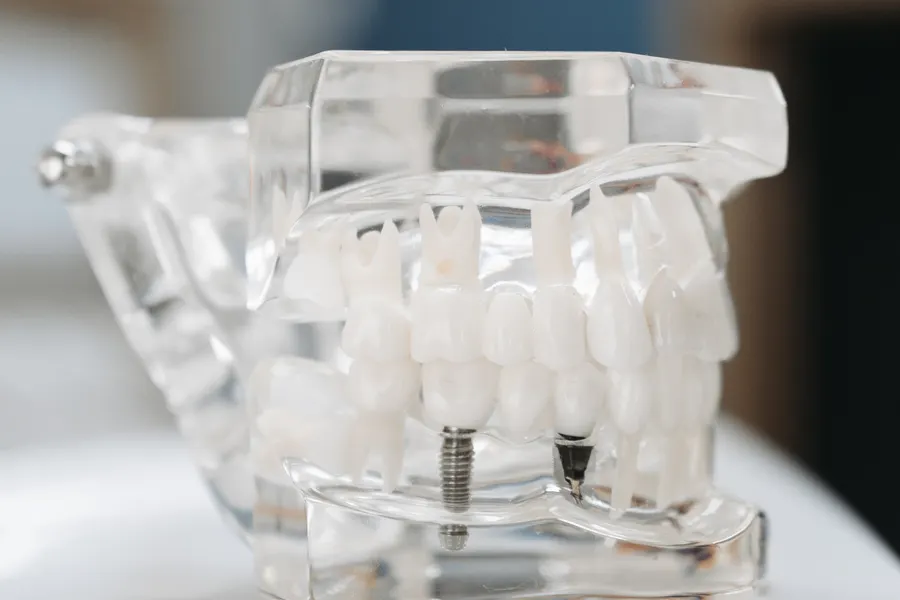
Dental veneers for missing teeth, implants, and bridges solve different problems. A veneer changes the visible surface of an existing tooth. An implant replaces a missing tooth root with a surgical fixture and restoration. A bridge fills a missing tooth space by using neighboring teeth or implants for support. For a true missing tooth, implants or bridges are usually more direct restorative options, while veneers may only help small cosmetic gaps.
| Option | What it does | Reference cost pattern | Invasiveness | Typical visits | Often considered for | Main drawback |
|---|---|---|---|---|---|---|
| Veneer | Covers the front surface of an existing tooth | Per-tooth cosmetic pricing | Usually lower than implant surgery | 2-4 visits | Small gaps, shape correction, color or surface changes | Cannot replace a missing root |
| Implant | Replaces missing tooth root and crown | Higher surgical and prosthetic cost | Surgical, case dependent | Several stages | True missing tooth, missing molar, long-term restoration planning | Bone, healing time, and medical suitability matter |
| Bridge | Fills a missing space using support teeth | Mid-to-high depending on materials and units | May require preparation of support teeth | 2-4 visits | One or more missing teeth when support teeth are suitable | Can affect neighboring teeth |
Decision signals include:
- Choose a veneer discussion when the tooth exists and only shape or gap appearance is the concern.
- Choose an implant discussion when the root is missing and bone support is adequate or can be planned.
- Choose a bridge discussion when neighboring teeth already need crowns or an implant is not suitable.
- Ask for X-rays before comparing prices.
- Ask whether the option restores function, appearance, or both.
For the full implant treatment path, including bone graft and healing, QGO's full mouth dental implants cost and timeline guide for China explains the staged process. Compare all three options inside the broader cosmetic dentistry overview and procedure menu in China.
How Many Veneers Do You Need for a Missing Tooth or Gap?
The number of dental veneers for missing teeth depends on whether the issue is a real missing tooth, a small space, or uneven tooth width. Small front gaps may involve two to four teeth so the smile looks balanced. A large missing tooth space may not be a veneer case at all. A dentist should assess photos, X-rays, bite, gum line, tooth proportions, and smile width before giving a count.

Veneer count depends on:
- Whether the gap is central, lateral, or near the canine.
- Whether the neighboring teeth are narrow or rotated.
- Whether one tooth would look oversized if only one veneer were placed.
- Whether color matching requires treating several front teeth.
- Whether the patient wants minimal work or a broader smile-zone plan.
| Scenario | Typical veneer count discussion | Alternative option | Typical visit pattern | Price boundary |
|---|---|---|---|---|
| Small central gap | 2 front teeth | Bonding or orthodontics | Consultation plus fitting visits | Per-tooth reference pricing |
| Narrow lateral incisor or peg-shaped tooth | 1-2 teeth | Bonding or veneer | Case dependent | Material and lab dependent |
| Single missing front tooth space | Often not a veneer-only case | Implant or bridge | Multi-stage if implant | Final cost depends on assessment |
| Missing molar | Veneers usually irrelevant | Implant, bridge, partial denture | Multi-stage or restorative visits | Functional restoration pricing |
The per-tooth math is laid out in QGO's porcelain veneers pricing in China by tier comparison. Use it only as a reference price, because final pricing depends on material, dentist assessment, scans, city, lab work, and follow-up needs.
Composite Bonding vs Porcelain Veneers for Small Gaps: Which Wins?
For small gaps, composite bonding may be more conservative than dental veneers for missing teeth because it can add tooth-colored resin to an existing tooth with less preparation in selected cases. Porcelain veneers may cost more and involve lab work, but can offer a more structured surface and shade plan. The better option depends on gap size, bite, enamel, color goals, maintenance expectations, and dentist assessment.
| Option | Reference cost per tooth | Reversibility | Visit count | Stain resistance | Common use | Main caution |
|---|---|---|---|---|---|---|
| Composite bonding | Lower starting reference | Often more conservative | Often shorter | Lower than porcelain | Small chips, edges, small spaces | May stain or chip sooner |
| Porcelain veneer | Higher reference | Usually less reversible | More structured | Higher than composite | Larger shape or color planning | Tooth preparation and replacement planning matter |
Bonding may fit when:
- The gap is small and bite forces are manageable.
- The patient wants a lower starting reference price.
- The dentist wants to preserve enamel.
- The case may need adjustment over time.
Veneers may fit when:
- Several teeth need consistent shade or shape.
- The patient accepts higher reference cost.
- Lab-made material is appropriate.
- The smile-zone plan needs broader symmetry.
The procedure walkthrough is covered in QGO's dental bonding before and after patient guide. Patients comparing bonding and veneers can also review the published cost of veneers dental in 2026 per-tooth price breakdown.
Cross-Border Veneer Treatment: What International Patients Should Plan For
Cross-border dental veneers for missing teeth require more planning than a local cosmetic appointment, especially when the patient is asking about a missing tooth. International visitors should clarify whether the clinic is solving appearance, function, or both. They should also confirm English communication, X-ray review, appointment timing, quote inclusions, temporary restorations, aftercare, and what happens after returning home.
| Planning item | Local private clinic | Nearby dental tourism market | China with coordination support |
|---|---|---|---|
| Price visibility | Often higher but familiar | Often lower, varies by clinic | Reference pricing needs clinic confirmation |
| English support | Usually direct | Varies | Should be arranged before booking |
| Follow-up | Easier to return | Depends on travel distance | Needs remote communication plan |
| Records handling | Usually local | Varies | Should include photos, X-rays, and written notes |
Before departure, ask:
- Whether the option is veneer, bonding, bridge, implant, or a staged plan.
- Whether the quote includes imaging, temporary restorations, lab work, final fitting, and review.
- Whether airport-to-clinic movement should use a private airport pickup and drop-off service.
- Whether QGO's medical travel coordination service in China can support scheduling, English communication, and follow-up messages.
- Whether the provider boundaries and coordination checks are clear in QGO's trust center for medical travel safety and aftercare planning.
To see the full menu of how this fits inside broader dental planning, review QGO's complete cosmetic dentistry service for international patients in China. QGO coordinates planned care logistics and communication; QGO does not perform the dental work.
When Veneers Are Not the Right Answer: Honest Alternatives for Missing Teeth
Dental veneers for missing teeth are not the right answer when the missing tooth space needs root replacement, chewing support, bone evaluation, or a stable long-term restoration. In those cases, a dentist may discuss implants, bridges, or removable partial dentures. Each option has different cost, timeline, maintenance, and invasiveness. A responsible plan starts with diagnosis, X-rays, and licensed dentist advice, not a cosmetic price comparison alone.

| Alternative | Cost pattern | Invasiveness | Typical timeline | Appearance planning | Often considered when |
|---|---|---|---|---|---|
| Implant | Higher reference cost | Surgical | Staged healing and restoration | Single tooth or multiple teeth | Root is missing and bone support is suitable |
| Bridge | Mid-to-high depending on units | Tooth preparation may be needed | Shorter than many implant plans | Can fill visible gaps | Neighboring teeth can support restoration |
| Partial denture | Usually lower reference cost | Removable | Faster in many cases | Less fixed than implant or bridge | Multiple missing teeth or budget limits |
Implant discussion is important when:
- The tooth root is missing.
- Chewing load matters.
- The gap is large.
- Bone and gum condition must be evaluated.
Bridge discussion is important when:
- Neighboring teeth already need crowns.
- Implant timing is not suitable.
- A fixed non-surgical option is being considered.
Partial denture discussion is important when:
- Several teeth are missing.
- A removable option is acceptable.
- Budget or medical factors limit other options.
For comprehensive implant planning, QGO's full mouth dental implants cost and timeline guide for China covers stages, healing, and follow-up. These alternatives also sit inside the broader cosmetic dentistry and restorative treatment menu in China.
FAQ
Can veneers be used to fix a missing front tooth?
Dental veneers for missing teeth usually cannot replace a truly missing front tooth because they need an existing tooth surface. They may help if the issue is a small gap, narrow tooth, or uneven neighboring tooth shape, but an implant or bridge may be more appropriate when the tooth root is gone. A dentist should review X-rays, bite, gum condition, and tooth proportions before recommending any option.
How many veneers do I need for a gap?
Some small front gaps may involve two veneers, while broader smile-zone planning may involve four or more teeth. The number depends on gap size, tooth width, color matching, smile line, bite, and whether a single treated tooth would look out of proportion. Use QGO's porcelain veneers pricing in China by tier only as a reference before a clinic assessment.
Do veneers work on gaps between teeth?
Veneers may work for selected small gaps between teeth when the teeth are healthy and the bite allows a natural shape. For larger spaces, orthodontics, bonding, bridges, or implants may be more suitable. International visitors should review the cosmetic dentistry overview and procedure menu for international patients in China before assuming veneers are the main solution.
Is it better to get an implant or a veneer?
An implant and a veneer solve different problems. An implant is usually discussed when a tooth root is missing and functional replacement is needed. A veneer is usually discussed when a tooth exists but needs surface, shape, or color improvement. For cross-border planning, review the trust center for medical travel safety and aftercare planning and ask the dentist to explain why one category fits your case.
How long do veneers last on front teeth?
Veneer lifespan depends on material, bite, enamel condition, oral hygiene, grinding, diet, maintenance, and dentist assessment. Porcelain veneers are often discussed as longer-lasting than composite bonding, but no article can promise how long a specific case will last. Patients should ask about night guards, repair pathways, replacement planning, and what to do if a veneer chips after returning home.
Related Articles
- Cosmetic dentistry overview and procedure menu for international patients in China – PILLAR overview
- Cost of veneers dental in 2026 per-tooth price breakdown – same cluster
- Dental bonding before and after real procedure walkthrough – same cluster
- Dental bonding near me cost guide and what to expect – same cluster
- Cosmetic dentistry services available in China – planned same-cluster guide
- Dental bonding what to know before you book – same cluster
- Cosmetic dental bonding differences from restorative bonding – same cluster
- Full mouth dental implants cost and timeline guide for China – cross-cluster alternative
- Porcelain veneers pricing in China by tier – related service page
QGO Medical China provides coordination support only. We do not provide medical diagnosis, dental treatment, emergency care, or promised outcomes. All medical and dental decisions should be made in consultation with licensed clinicians.