
How to Read a Chinese Hospital Bill: What Foreign Patients Are Charged For
A Chinese hospital bill is the itemised statement a hospital issues after care is delivered. It is not the same document as the deposit you paid before admission, and it is not the same thing as a quote. Three separate figures appear in a medical travel arrangement, and mixing them up is the most common source of budget surprises.
This guide explains what appears on a Chinese hospital bill, why the final amount often differs from the estimate, which lines are worth checking, and what QGO can and cannot do about billing. It is written for visitors planning a health check-up, dental treatment, or a procedure in China — including people whose insurer will want the paperwork afterwards.
QGO Medical China provides coordination support only. We do not price hospital services, interpret clinical findings, or dispute hospital charges on your behalf.
What is a Chinese hospital bill, and who issues it?
A Chinese hospital bill is the itemised statement a hospital issues after care is delivered. It is not the same document as the deposit you paid before admission, and it is not the same thing as a quote. Three separate figures appear in a medical travel arrangement, and mixing them up is the most common source of budget surprises.
To keep it simple: the estimate is what the hospital expects the treatment to cost before everything is known. The deposit is money you prepay so the hospital can charge against it during admission. The final bill is what the hospital actually posts after the service is delivered or you are discharged. A visitor who treats the deposit as the price, or the estimate as the bill, will be surprised.
The bill itself is issued by the hospital that provided the care. It is the hospital’s own financial document, and it carries the hospital’s identity and charge items. Your coordination provider does not issue it, cannot amend it, and cannot translate a clinical line into a clinical decision.
Two more streams sit alongside it. The coordination fee is charged separately by QGO for the coordination work itself, and it never appears as a line on the hospital bill. The travel and logistics costs — flights, hotel, local transport — are paid to those providers directly, also not on the hospital bill. So a single trip produces several documents, and the hospital bill is only one of them.
What kinds of charges appear on a hospital bill?
The line items on a Chinese hospital bill fall into a small number of categories: consultation and registration, laboratory testing, imaging and procedures, medicines and consumables, room and ward charges, and any items you agreed to add beyond the base scope. The exact wording and the exact price of each category vary by hospital, city, and department, so nobody can give you a universal item list for China.
The practical consequence is that you should judge a bill by structure rather than by a memorised checklist. The categories above are how Chinese hospital pricing is organised in practice: the same broad category can contain very different items depending on what was actually done.
Consumables are the line most visitors do not expect. Implants, catheters, stents and surgical consumables may be charged separately from the procedure fee, and imported versions cost more than domestic ones. This is why a dental implant quote and a colonoscopy quote can look complete and still leave room for a separate consumable charge. Ask in advance which consumables are covered by the quoted price and which are charged separately.
Medicines follow the same pattern. Hospitals usually dispense and bill medicines themselves, which is why importing your own medication can create a billing and customs problem rather than a saving. The rules on bringing personal medication into China are set by customs, not by the hospital.
| Bill category | Who sets the amount | What changes it | What to ask for in writing |
|---|---|---|---|
| Consultation and registration | The hospital | Service tier, whether a specialist or a general service, and whether an international department is used | How registration and consultation are charged, and whether they are inside the quoted scope |
| Laboratory testing | The hospital | Which tests were actually run, and the package boundary if you bought a package | The written test list with each item named, so two quotes can be compared line by line |
| Imaging and procedures | The hospital | How many scans were performed, whether additional imaging was clinically required | Which imaging is included and what happens if extra imaging is clinically required |
| Medicines | The hospital | Domestic versus imported product, and the actual dosage used | Whether medicines are billed separately from the procedure, and whether any item is not included |
| Consumables and implants | The hospital | Imported versus domestic device, and how many were used | Which consumables are included in the price and which are billed separately |
| Room and ward charges | The hospital | Room type, length of stay, and whether a private room was requested | The room type and the daily rate, so the difference is visible in advance |
| Coordination fee (separate stream) | QGO Medical | Service scope, how many follow-ups are included, how much communication is involved | A written scope of the coordination work, kept separate from the hospital bill |
| Travel and logistics | You or your travel arrangement | Dates, city, length of stay, local transport | An estimated total for the trip, so it is not discovered at the payment step |
Why does the final bill differ from the estimate?
Because the estimate is a planning range and the final bill is what the hospital actually posted. The gap has a small number of common causes, and most of them are visible in advance if you ask the right questions before you travel.
The most common cause is that the initial scope was never fixed. A screening package may include a defined test list, while a hospital quote for a procedure may describe a starting point rather than a fixed scope. Anything discovered during treatment — an additional scan, a repeat test, a different consumable — was never in the estimate.
The second cause is currency. A deposit is usually set and paid in RMB while your plan may be budgeted in another currency. The amount you hand over and the amount that lands in the hospital account can differ once the settlement rate is applied, and the difference shows up on the final statement.
The third cause is timing. A short admission that ends early, or a package where fewer items were needed than assumed, produces a final bill below the deposit. That is not a billing error; it is the settlement stage working as designed, and the refund path is a separate process from the payment path.
None of this is a reason to distrust the bill. It is a reason to define the scope in writing before admission, and to treat any estimate as a range rather than a number.
Which line items are worth checking before you pay?
Three things are worth checking: whether the itemised bill matches the scope that was agreed in writing, whether consumables and medicines were quoted as included or excluded, and whether the coordination fee has been kept separate from the hospital charges.
Start with scope. If you were given a written test list or a written procedure description, compare it against the itemised bill line by line. A difference is not automatically a problem — it may reflect clinically necessary additions — but it should be explainable, and the hospital should be able to explain it.
Second, look at how consumables and medicines were handled. If they were quoted as included and they appear as separate lines, ask why. If they were quoted as separate, there should be no surprise. Ambiguity on this single point is the most common cause of a disputed final bill.
Third, confirm the coordination fee has not been folded into the hospital charges. Your coordination fee is a separate service fee for separate work. When it is visible as its own line with its own written scope, the total is verifiable. When it is buried inside an "inclusive" package figure, you cannot check anything.
Finally, keep every document. The itemised bill, the deposit receipts, the agreement, and the settlement statement are what an insurer will ask for. QGO cannot represent you in a dispute with a hospital and does not do so, but the documentation is what makes a question answerable.
How do charges differ between hospitals and cities?
Charges differ because they are set locally: by hospital tier, by city, by department, and by whether the hospital is public or private. A figure that one hospital quotes for the same service may be a different figure at another hospital in the same city, and a different figure again in another city.
City matters because healthcare costs vary with local wage levels, operating costs and the patient mix a city attracts. The same screening package priced in Shanghai, Guangzhou and Beijing will not produce the same number, and published city-level ranges are only ranges, not quotes.
Hospital tier matters just as much. A public tertiary hospital and a private international hospital can differ several-fold for the same clinical scope, mainly through staffing, consumables and service model rather than through different clinical work.
The practical way to compare is not to compare headline package prices from different cities. Compare like for like: the same hospital tier, the same written item list, the same consumables policy, and the same accommodation type. When you compare two quotes with different scopes, the difference tells you about the scopes, not about the hospitals.
What happens when the bill is higher than the deposit?
The hospital charges the deposit against your account during admission, and if the posted charges exceed the account balance, you are asked to top up. If the final charges come in below the deposit, the difference is refunded through a separate settlement step.
As a planning range, many foreign visitors should expect RMB 5,000-30,000 for common non-emergency admission deposits, and complex surgery, imported consumables, private rooms or ICU risk can require more. Smaller situations sit below that: outpatient check-ups are often settled as a package or a few thousand RMB, and minor day-case procedures sit in between. Ask the hospital for the initial deposit amount and the top-up threshold before admission, not after.
Top-up during admission is a normal stage rather than an exception. The point of asking about the threshold in advance is that you want to know the trigger and the acceptable payment method before you are in a hospital corridor with a balance requirement.
On the other side, settlement works the same way. If the posted charges are lower than what you prepaid, the difference follows the hospital’s refund process, which is separate from the payment process and may have its own timeline. Ask about the refund timeline and the required documentation before you make the payment, not after you have left the country.
| Stage | What it means | What to ask |
|---|---|---|
| Estimate | The expected cost range before all charges are known | Which items are excluded from this range? |
| Deposit | Prepaid account balance held by the hospital and charged against during admission | What triggers a top-up, and by how much? |
| Final bill | The actual posted charges after service or discharge | When and how do I receive the itemised statement, and can I get English support for it? |
What does QGO coordinate about billing, and what stays with the hospital?
The hospital sets and issues its own charges, and QGO never prices, alters or audits a hospital line item. What we do is make the scope visible before you travel, keep the coordination fee separate from the hospital bill, and make sure the documents exist for settlement and for your insurer.
QGO’s coordination work is administrative and logistical: assembling records, arranging appointments, coordinating translation and report delivery, and keeping the written scope of what is included. The coordination fee is charged for that work and is documented separately. It is not a mark-up on the hospital bill, and it does not sit inside a hospital package figure.
What we do not do is set a price for hospital services, promise what the final bill will be, interpret a clinical line item, or argue a charge with a hospital on your behalf. If a charge looks wrong, that is a question for the hospital, and the documentation is what makes the question answerable.
Because the final bill belongs to the hospital, the most useful thing to prepare before travel is a written scope: what is included, what is excluded, what might be added and why, and what happens if the treatment is more extensive than planned. That document, plus the itemised bill and the settlement statement, is what you will need for an insurance claim and for your own records.
If you want the numbers rather than the structure, our separate guides cover hospital charges against coordination charges, and how deposits, top-ups and refunds work in practice.
Frequently asked questions
The six questions below come up most often when a visitor first sees a Chinese hospital bill. The answers are deliberately short; the sections above carry the reasoning.
Is a Chinese hospital bill itemized or a package price?
It depends on what you bought. A screening package may be settled as a package figure, while a procedure is normally settled against itemised charges. Ask the hospital in advance whether the quote is package-based or itemized, and ask for the written test list with each item named if you intend to compare two quotations.
Can I get an English version of my hospital bill?
Chinese hospitals generally issue documentation in Chinese, and an English version is usually an additional service rather than an automatic part of the statement. If your insurer or your home-country clinician needs the bill in English, raise it before the visit and confirm what the hospital can provide and on what timeline.
Who pays the coordination fee — the hospital or QGO?
You pay it to QGO, separately from the hospital, and it is never a line on the hospital bill. It covers coordination work only: records, booking, translation support, logistics and report coordination. Keeping it separate is deliberate, because a bundled figure cannot be checked line by line.
Can I dispute a charge on my hospital bill?
You can ask the hospital to explain any line you do not recognize, and QGO can help you prepare the question and the documentation. We cannot represent you in a dispute with a hospital and do not attempt to. Discrepancies are usually resolved fastest when the written scope agreed before admission is compared against the itemised bill.
Do I get a refund if my treatment costs less than the deposit?
Yes. If the posted charges come in below what you prepaid, the difference is refunded through the hospital’s settlement process, which is separate from the payment process and has its own timeline. Ask about the refund timeline and the required documentation before you pay, not after you have left the country.
Is the hospital bill an official medical record I can give to my insurer?
The itemised bill is the hospital’s financial statement and one of the documents an insurer will normally ask for, but it is not a clinical report. Keep it together with the clinical report, the deposit receipts and the settlement statement, because insurers typically require the financial document and the clinical document together.
If you want the numbers rather than the structure, our guides cover hospital charges against QGO coordination fees, and how deposits, top-ups and refunds work in practice. To discuss a specific plan, send the scope you have in writing and the hospital you are considering.
References
Sources were reviewed for hospital pricing governance, health check-up and treatment billing context, and cross-border care coordination. Last reviewed: 2026-11-02.
- National Healthcare Security Administration (NHSA) of the PRC
- Beijing Municipal Healthcare Security Administration
- Shanghai Municipal Healthcare Security Administration
- State Council of the PRC — Policy portal
- National Health Commission of the PRC
- Beijing Municipal Health Commission
- Shanghai Municipal Health Commission
- Peking Union Medical College Hospital
- Huashan Hospital, Fudan University
- World Health Organization
- U.S. CDC Travelers Health — Medical Tourism
- Medical Tourism Association
Image credits / 图片来源
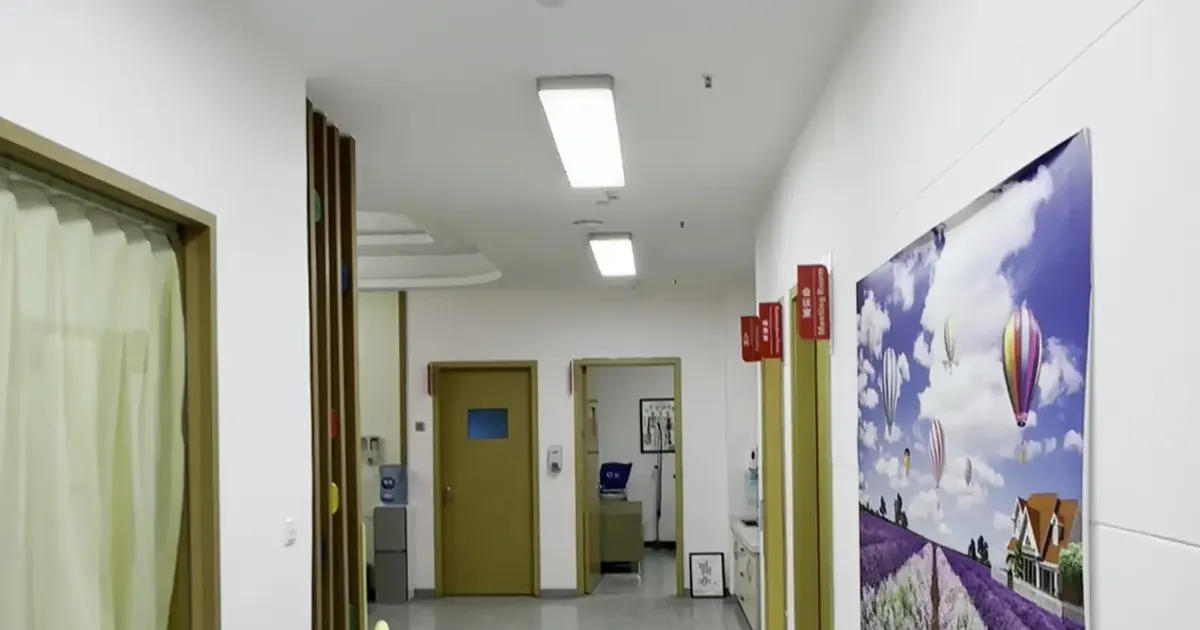
- Real photograph — Hospital corridor in China with wooden doors, Chinese department signs and wayfinding boards – QGO Medical — Real photograph taken on site at a QGO partner medical centre in China. Courtesy of the centre.
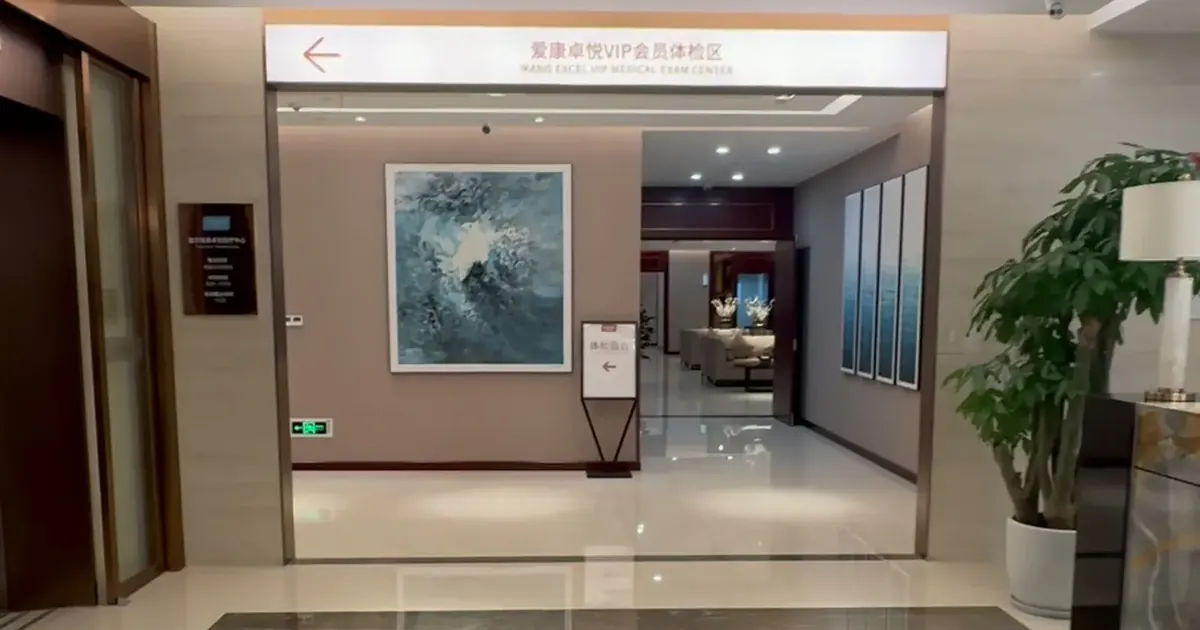
- Real photograph — Entrance to the VIP health check-up area at a partner medical centre in China, with bilingual Chinese-English signage and a marble floor – QGO Medical — Real photograph taken on site at a QGO partner medical centre in China. Courtesy of the centre.
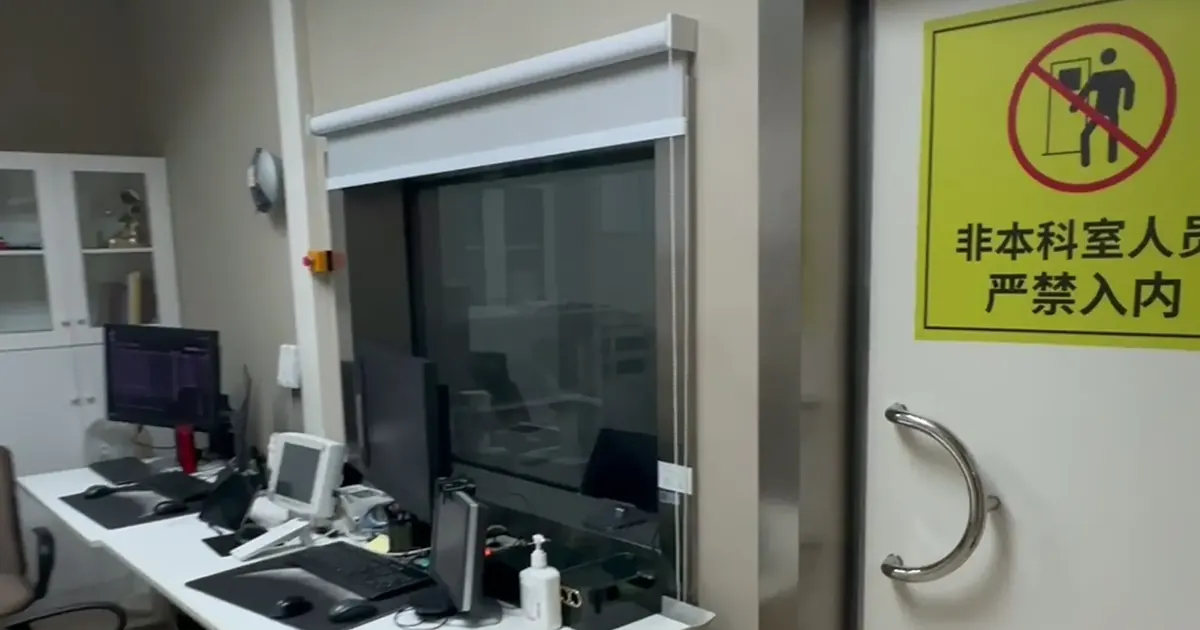
- Real photograph — CT and imaging scan room in a Chinese medical centre with a white scanner and a control console – QGO Medical — Real photograph taken on site at a QGO partner medical centre in China. Courtesy of the centre.
Editorial Review / 撰稿审核
Author / 撰稿: QGO Medical Editorial Team
Reviewed by: QGO Operations Lead
Last reviewed: 2026-11-02
Next review: 2026-12-02 (A-tier PILLAR monthly review)
Related QGO Guides
- Hospital fee vs QGO coordination fee – the two fee streams and what each covers
- How foreigners pay a Chinese hospital – deposits, top-ups, payment methods and refunds
- Payment, fapiao and insurance FAQ – receipts, insurance claims and who collects what
- China health check-up cost – what a screening package actually costs
- Medical records translation and second opinion – what to bring from home before a specialist review
- Health check-up preparation checklist – documents, fasting and medication questions before the visit